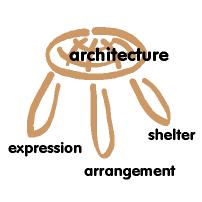
| 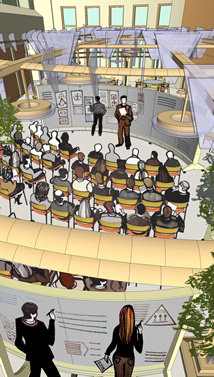 THESIS + Example = Demonstration | | 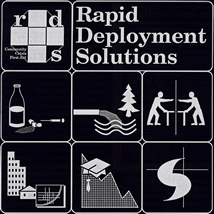 | Questions + QUEST = Story | The search for Authentic Architecture | Note: the notes below, in black, were written in preparation for my presentation. During the talk, I managed to get through about 50% of the material I wanted to cover. By following the links provided, you can review the full scope of what I wished to say. Annotations of remarks I made during the talk, in addition to this outline, were added afterward; They are in this color. Additional annotations, providing more detail, are in this color. mt | | My lecture, tonight, is the first public presentation of my SFIA THESIS. I am going to take you through some of the basic premises of my Thesis and, as an example of it, describe the MG Taylor RDS concept as well as an upcoming deployment to the World Economic Form Annual Meeting this coming January. My approach to this material will be autobiographical. What questions came to me in my quest for Authentic Architecture? What experiences did I seek in order to answer those questions? What has been the consequence of following this way of building a practice of architecture. | I did not get into the consequences as much as I intended so I will add these thoughts throughout this outline. The path that I pursued has not been an easy one and it, many times, steered me away from success as it is usually measured in architecture: building buildings of great architectural quality. This fact bothered me for many years. I often wondered if somehow I had failed in my mission. Over the few couple of years, as I have built this web site and prepared my Thesis - and, as the totality of my concept of architecture and its practice has been developed - I have come to realize the enormity of what I took on and the efficiency of my heuristic search as I traveled from career choice to choice. My values and principles guided me well and I was able to stay on course to a destination, that in the beginning, I would have rejected. This is an important part of my message to you as you prepare for your own practice. Follow your true voice and do not let pre-packaged ideas of success take you away from your vision and ability to make a contribution. | | I will read from prepared material more often than usual as I am going for a level of precision and time economy not possible with a more extemporaneous dialog. | | After my formal presentation, which I will hold to the minimum possible, given the scope of the material, Gail Taylor (wife and co-founder of MG Taylor) will join us for Questions and Answers. | | Unfortunately, with our late start and the time it took to get through even half the material, our Q & A was far shorter than desired. You can e-mail me and I will respond. This includes those who did not attend and have followed the web site and seen the tape of the session. e-mail link Gail, also will respond. e-mail link | What is Architecture? Why Organic? | I started asking this question in the mid 50s when I started work [link] in architecture. The context of this time is important if you are understand the nuance of my answers. In the mid 50s, architecture was just ending an extremely creative phase and proceeding to turn “modern architecture” into an orthodoxy and dogma. The architecture schools were increasingly teaching some style of architecture as architecture (and you accepted it or you were out) which is why I never went to school and Fred Stitt, who suffered through it, came to create SFIA [link] based on an entirely different model of architecture and education. The Wrights, father and son were executing brilliant works in the 50s as was Shindler and many others. A movement to make small modern affordable houses [link] had grown out of the post WWII period and was just beginning to run it course. The marketplace of mass consumption and buildings as a commodity was in full swing. Architecture was becoming big business.The fragmentation of the design, manufacturing, building, using process was in full swing. Professionalism was replacing genius. There existed, in architecture and well beyond it, extreme hostility to integrity of design, quality and any view point beyond the immediate exploitation of the moment. The long range view was ostracized. Suburban sprawl and Urban stacks of multiple stories of bland one story buildings was the rage. the shopping center was king. Full cycle economics and ecology were not even considered. The big mantra was “be practical” and this meant conforming to the exploitation of land, history, and everything that stood in your way.It was an exuberant time and almost completely mindless. Philosophy was out. You could get fired for thinking and questioning. Architecture was reduced to formula. | | To start, I will define ORGANIC ARCHITECTURE. To me this is the study of how nature does things and then applying this learning as active design principles to the making and using of human environments [link]. | A term for this process today is biomimicry [link]. I want to stress the USING aspect. I do not see architecture as merely a design exercise. It is not a visual art. It is an experiential art. The using of architecture is as significant a part of its creation as the design and building of it [link]. | What makes Architecture Authentic? Why is this important? | | I use the term AUTHENTIC ARCHITECTURE because, for me, architecture is fact-based. It cannot be faked. It is the expression of human choices thus the true expression of their values [link]. | | Building are expensive. They are complex. There are millions of little decisions that go into the making of them. Each of these choices have to be weighed against a myriad of alternatives: Cost now versus the long term sustainability of the work. How is shelter, arrangement and expression balanced as the many competing aspects (from the mundane to the highest concept) are weighed? Issues of material selection,transportation, build-ability, site selection and placement, and so on. All of these are votes. Like a market, in the end the votes add up to a clear and undeniable statement of the builder’s values. | What does Architecture do? Is it an Art? | | This is what gives rise to how I define architecture as ART and the reason for the three ATTRIBUTES OF ARCHITECTURE [link]. These definitions where formulated by me in the late 50s early 60s as a consequence of the questions I was asking and my relationship with Wright, Rand and Brandon. | How do we know real Architecture? | | From this, the CRITERIA [link] of architecture naturally follows. And, why architecture must SPEAK [link], be based on a clear THEME [link]; why it is not mere building, is not a visual art and why it can only happen when it is the true expression of an unique point of view - a creative VIOCE [link]. | There are many criteria that makes for a good piece of work. None of them can be ignored. Different camps of architecture pay attention to different aspects of this list and trumpet their approach AS architecture. This will not do. Some push the esthetic aspects. Some the utility. Some the energy and ecological. All worthy yet inadequate. Parts do not make a whole. Technique, alone, is not art. A building that has nothing to say, that offers no viewpoint on reality cannot be art. A building that is but a jumble of mixed and contradictory voices cannot move the soul. A work without a clear idea cannot have theme and therefore cannot be integrated. All these are buildings; they may be useful, even pleasant but not compelling. This voice need not be only that of the architect. In a complex project it cannot be. It cannot be a Tower of Babel either. GroupGenius is possible in the making of architecture as it is in other things. Architecture will not result from the compromise of many dissenting voices. It emerges as a consequence of true collaboration, rapid iterations of designing, building and using while keeping a vision in mind. | What is the scale and scope of Architecture? | | The SCOPE of architecture, as thought of and practiced today is defined dangerously in too small a framework. Architectects are designers not master builders. It has to be expanded greatly if we are not going to default on the task of bringing design to the whole of our planetary experience; the world is becoming a human artifact by default while we fiddle with the few architectural parts that are considered to be interesting and legitimate commissions [link] [link]. | What concerns Architecture? What is relevant now? | | THESIS STATEMENT [link]. This is a statement of both what I Believe architecture to be and the critical architectural issues of our time. It challenges the present practice mode, scope and ethics. | How do we think about Architecture? What guides us? | | Some PRINCIPLES [link] that are relevant to our circumstance today. | | These are stated in the declarative as a positive affirmation of Authentic Architecture. These are not all the principles of architecture. They are the principles I believe to be largely ignored today. In so doing, we distort the practice of architecture and abandon it to market forces deprived of the intelligence and dialog necessary so the market can make better choices. This view of architecture does not have a voice in our society. People cannot be blamed for the choices they make when the options are not presented. The problem is that contemporary people, American’s in particular, are not disposed towards philosophy. I have found that my writings and drawings (until recently) have not impressed many but that everything I have built has been widely accepted. Not enough architecture is being built - the many good works are buried in the glut of infrastructure, blot housing and speculative building. Most of what is build is too expensive, and exiting regulations make alternative architecture nearly impossible, so many are disenfranchised from the ability to accomplish a decent environment. In a world where buildings are first a commodity and second a place to live and work, the price is the predominate concern. All this fuels a downward cycle. This is a system problem far more than it is a problem of talent or desire. A better METHOD of creating architecture is required. This means better principles, practices and organizational means. | What are key things I have learned in 48 years? | | Some LESSONS [link]. I have learned mostly the hard way. | What is my contribution to the Art and practice? | | My APPROACH [link]. has been to gather experience in every aspect of the making of an environment; to synthesize this experience into a system; to build a practice based on GroupGenius and ValueWeb organizational architecture; to create an architecture that, by its use, has a positive impact on people, their cognitive processes and their fortunes; thus DEMONTRATE the validity of a new concept of architecture and its practice. Wright based his works on a concept of a way of life. I base my work on a practice of a way of living and working. This practice model holds that works of all types are equally relevant, and, that ARCHITECTURE is the sum of all of it from a small living unit to the totality of human building on a planetary scale. | The RDS as an example of these concepts? | | The RDS as EXAMPLE [link]: The RDS is a complete system. It addresses significant human issues. It is made by a D/B/U ValueWeb and is used by one. It impacts government and corporate leadership and facilitates the practice of new work habits. It is a portable system that has to adapt to a variety of circumstances, survive the moving necessitated by this and make environment wherever it is. It is capable of serving communities in crises. For MG Taylor and SFIA Architects-Master Builders, it is one scale down from the ability to create the postUsonian. It is the smallest package in which the greatest part of my architectural THESIS can be demonstrated and facilitated into being. | The RDS also illustrates factors related to the consequence of practicing architecture in the way I discussed at the lecture. I did not, in my talk, get to these consequences to the degree I believe is necessary. This approach is not a path to quick success. For myself, it has taken 48 years to get to what now feels like a “start” in producing the works I have intended to build almost from the beginnings of my work. The choices I made that lead me to necessary learning experiences and to build the capacity that now exists (at the minimal scale to demonstrate validity) took me away, time and again, from the pleasures of building the many individual works that otherwise I would have accomplished by now. This has not been a pleasurable experience. However, it was work that had to be done in order to open up options that did not exist when I started my practice. So, you have to look at what I presented with a degree of personal caution. Beware, the label should read, this may be dangerous to your existing sense of well-being. The RDS was conceived in 1982 [link]. The idea was demonstrated shortly thereafter. It was articulated in a formal Proposal in 1985 and again in 1988 [link]. Since the mid 90s, it has been used in numerous business applications that, while worthy, have been a partial employment of the concept. The logistics have been demonstrated. In 2005, the WEF deployment will be the first expression of the environment applied to the kind of issue that the concept originally declared as critical [link]. Even this is only at the threshold of what can be called a full application. From thought to application took over 22 years. Nearly half of my working lifetime. The RDS is but one facet of the AGENDA I present here - and one of the easier ones to accomplish. There are consequences of thinking about architecture and its practice in the way that I have presented it. Not all of them are pleasant. The road ahead is a long one and not without uncertainties and personal risk. Clearly, I have voted to pursue this goal. My advise to you is that you think carefully about it and choose carefully if it -or some part or variant of it - is right for you. Be prepared for deferred financial and social rewards. There are many places to play and many task worth doing. Variety is required. It all can “add up” if we take the actions necessary to make it so. Building “low-tech,” sustainable, organic habitats in the Northern California redwoods is worthy; so is creating Bucky’s light weight air deliverable dwelling machines; and, restoring the traditional cities; or building Paolo’s Hexahedron [link]; focusing on co-housing and community development; how about reengineering our outmoded and decaying infrastructure, making workplaces that work, places of gathering that promote synergy, edifices of great expression and social meaning, landscape and parks? These are the architectural tasks, the pieces that make up the new global habitat. These works become a sustainable, organic, authentic, global architecture or they fail to do so to some degree. The measure of this degree will be our failure as a profession. How we reconcile our personal talents, desires, capabilities with the opportunities we each have will determine the margin. This is, on one hand, an individual choice. It is the consequence of the social organizations we choose to make. It is the aggregate of all of the votes in the global market of ideas, politics and commerce. | What is the critical Agenda for the next 25 years? | | The ROAD AHEAD [link]. We must re frame our concept of architecture and recreate its practice. Architecture must be understood on a planetary scale. It has to accommodate all life. It must be sustainable. It must inspire. It must be the image of what we want to become. | ART, by definition, challenges viewpoints. It is provocative. The art of architecture provides a living experience of new ways of being. The practice of architecture has to be relevant to human life and this includes the issues of the time in which any given work is built. The major architectural issue of our time is that, over the next generation, we - no matter which design strategies are chosen - will have designed a planet. We do not have the mechanisms and processes in place to do this in a responsible way. We cannot understand a system this complex and we cannot control it. We have to develop a design process that promotes emergence [link] and rejects command and control approaches. We humans can participate in this evolutionary co-design process and we can be stewards of it [link]. We can represent the voices of life forms whose nature does not allow them presence in the debates that are taking place [link]. The process, of which I speak, has to be iterative. It has to practice rapid prototyping employing high frequency, low magnitude steps with a great deal of feedback, dialog and contemplation in between these steps. Large numbers of people have to part of this dialog. This means it has to done by a disciplined work process else it will default to politics in the negative sense of the word. Participation in the process has to take place on multiple levels of recursion: global, regional, local, community [link]. This must be a cybernetic system not politics-as-usual. As far as I am concerned, to turn our professional back on this challenge and to continue to focus only on individual works will constitute a professional ethical failure and a personal moral default. By the definition of Authentic Architecture I have provided you, no matter how well individual works are done, to ignore this challenge is a loss of meaning, thus, authenticity. This, perhaps, may result in the sensational and the “artistic” - it will not result in profound art. Our time to choose paths is now. To wait is to choose for the status quo. The rate of human wars, the rate of habitat destruction, the rate of human building sets the AGENDA not our present sense of priorities. The purpose of a system is its output. What we are making today is the direct consequence of the systems we have put in place which is the direct expression of the values we hold. We cannot deny nor escape this consequence. It can be argued that we are on a valid evolutionary path and that the “hidden hand” will guide us to a successful state. Bucky argued that the role of humans is to bring consciousness to the universe - in other words, to participate. He called this anticipatory design. My argument is that even if we are on a valid path (or evolving toward many valid choices) it does little harm to bring as much serious engagement as we can to this journey. You can call this the precautionary principle of design. If we are on a path to disaster, or heading toward a less than optimal result, we can hardly fail to do better. Whatever the outcome we, will have stood up to the challenge, worked with clarity, documented our assumptions and our process, and measured the outcome. We stand, at worse case [link], to learn. Also, if we understand the risk of any strategy that is based on a single point of failure with a high probability of a catastrophic result, we will develop our ability to go into space [link]. This is the first time (in our recorded history as a species) that we have had the capability and responsibility to act on a planetary scale. We may fail. It may be that we will mess up one planet learning how to do planetary architecture. I hope not - this would be unbelievably sloppy. Failing while paying attention and bringing diligent effort to the process is acceptable. Failing by default is not. Creating a PLANET EARTH as a garden and work of art for the enjoyment of all life [link] is a worthy goal [link] and one that will require the engagement of our entire civilization. It is the ultimate (on a single planet level of recursion) market. It is the creation of immense wealth. It is a great challenge. It can be the long sought “moral equivalent to war.” It is a better game than many we are choosing to play today. It will never come about by mandate and force. It will happen when millions exercise their free choice and vote with the feet, their time, their attention, their dollars, their creative effort. | | | | | Architectural Projects 1952 - 2004 | | | | Matt Taylor
San Francisco
December 9, 2004 | 
SolutionBox voice of this document:
VISION • STRATEGY • DESIGN DEVELOPMENT |
posted December 9, 2004
revised December 12, 2004
• 20041209.363301.mt • 20041210,180167.mt •
• 20041212.672030.mt •
note: this document is about 95% finished
me@matttaylor.com Copyright© Matt Taylor 2004 | |
|