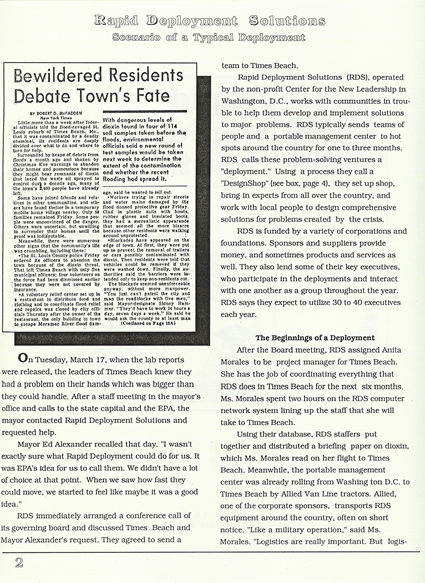
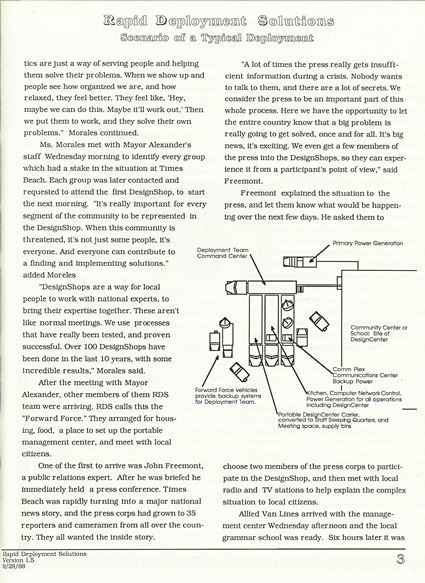
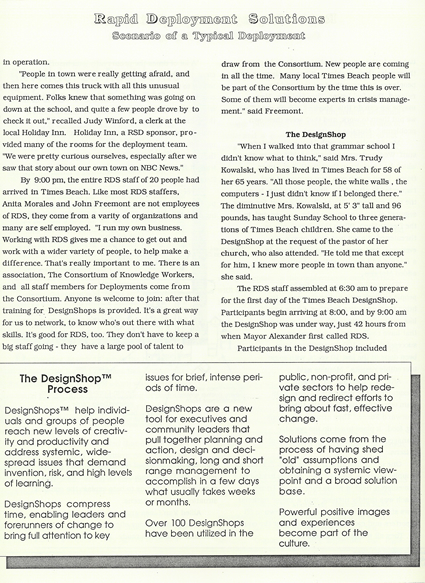
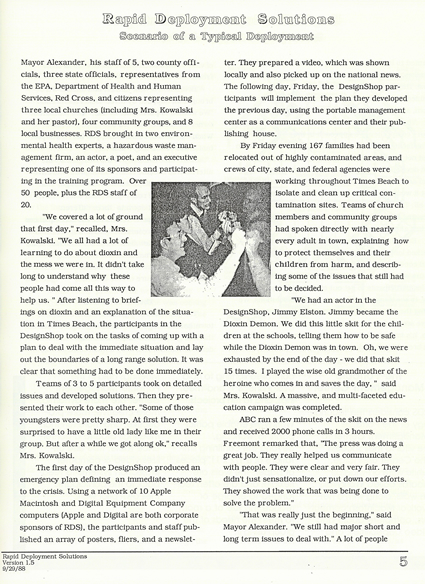
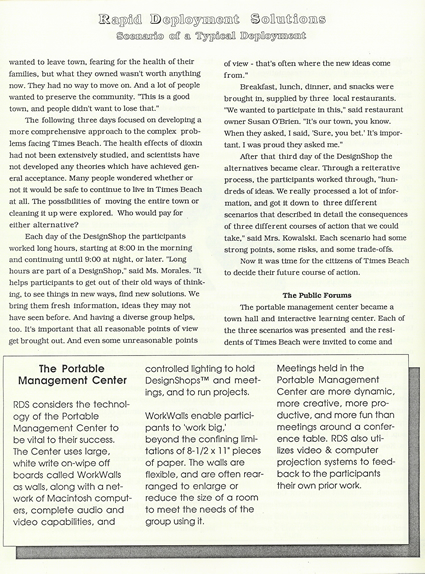
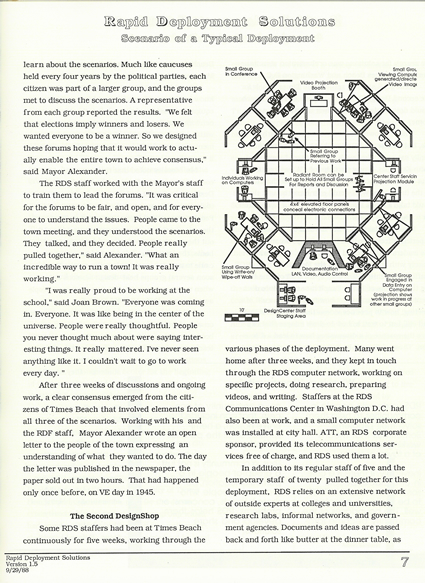
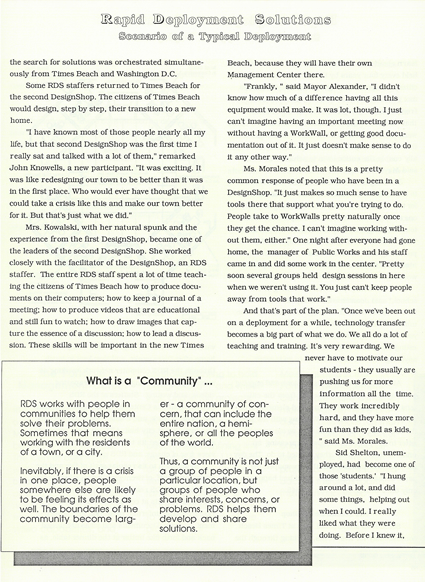
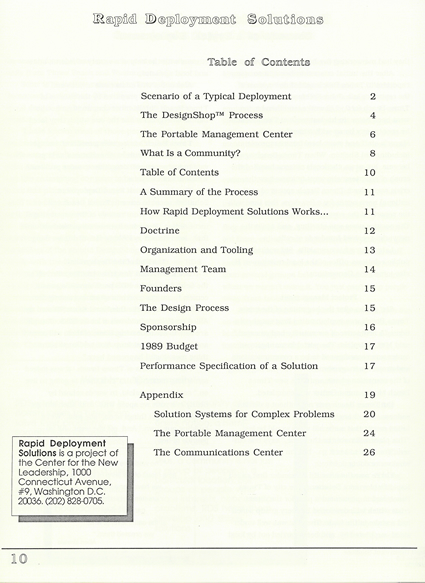
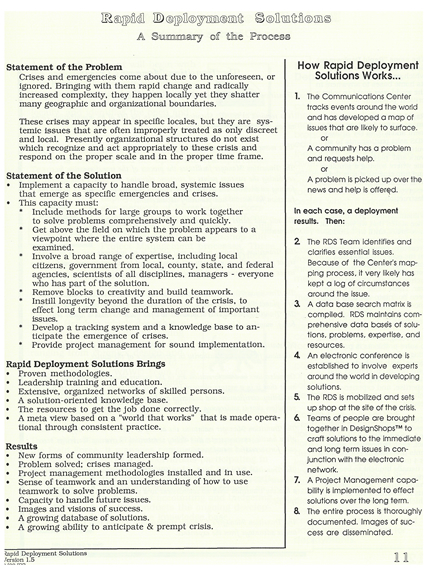
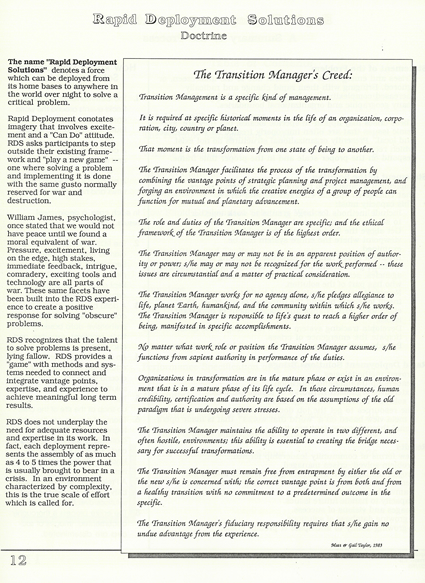
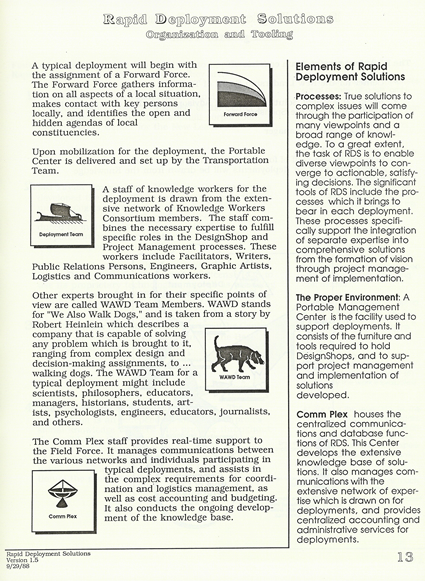
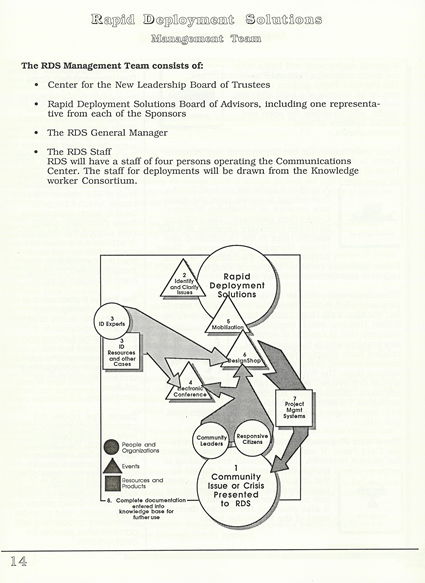
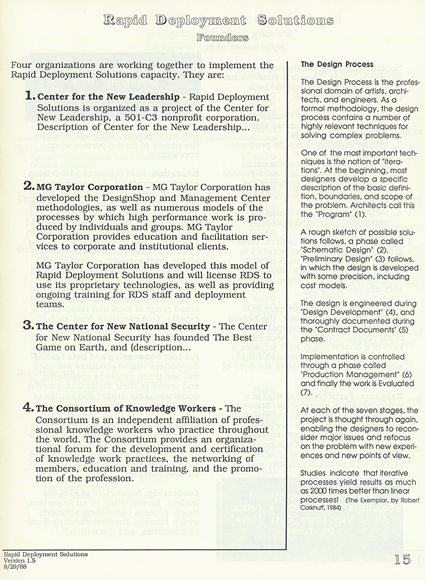
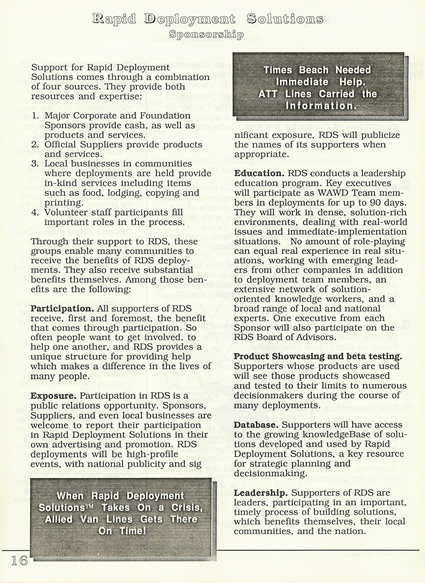
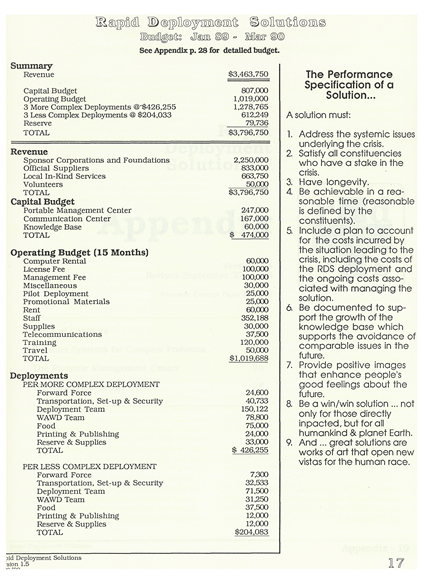
| This Concept Paper was written by Gail, myself and Langdon Morris in 1988 in response to some non-profit organizations, in Washington DC, who were interested in the RDS. It is a revision of an earlier version, drafted in 1985 and updated at the beginning of 1988, both of which were based on my 1983 concept as documented in my Notebooks. [link]. The icons used throughout this proposal were developed by Bryan Coffman [link]. | | What follows is the 1988 paper [version 1.5] with new annotations that further expand on the concept and set it more firmly in today’s context. | click on the pages to get a large screen view | | | I always liked the icons that Bryan did, esthetically, however I have always felt that they presented the concept in too narrow of terms. In fact, this entire paper does this. Everything it says is valid enough but it does not convey the scope of the systemic global issues that the RDS can - and must, if we are to live up to the challenges of our times [link] - deal with. We crafted this Paper to the times and the requirements of the proposed non-profits, in Washington DC, that were to be the host organizations. There was nothing wrong with their focus or concerns, it is just that they do not approach the full scope of the RDS Concept and possibility. This Paper is best read in the context of the MG Taylor Mission [link] and, of course, taking into account what has happened in the 16 years between its writing and today [link]. | | | | The article on the left is from the NY Times and it is what sparked the original RDS concept [link] in 1983. The critical aspect covered on this page is that the RDS has to have a standing office and the capability to deploy within 24 hours. As will be described elsewhere [link], in time this capability will integrate prior deployment experience with Weak Signal Research [link] to create an anticipatory capability. | | | We have, several times after writing this, integrated the press into the DesignShop process. This has been a difficult mating as the ethics and rules-of-engagement of the two cultures are very different. When we have been able to get over these speed bumps the results have been outstanding. To date, none of the mobile technology has been created. It exists, however, in our society - at least the major components do. None of the business related for-profit RDS deployment that we have done have required the level of stand alone power, communication infrastructure and shelter technology support. Deployments where there has been natural or human-made disasters will. This may present a ValueWeb Partnership opportunity [link] with the military (who often have to deploy under these circumstances anyway). We have developed plans to also make portable the complete environment that the RDS is installed in [link]. We are getting ready to develop an RDS with Armature - the first [link]. The next step up will be to do the structural shell also [link]. This will go a long way toward demonstrating Bucky’s vision of deployable buildings [link]. With this at least a promise will have been partially kept [link]. | | | When this was written we could claim an experience base of over a 100 DesignShops; now, that number (for the entire ValueWeb) is easily over 2,000 - I have lost track of the actual number. We have done many RDS deployments for commercial clients, as yet, not one along the scenario described above. Over the years, we have done numerous community based events in NavCenters and with the RDS. All of these have been small and not an example of an “emergency” deployment which is central to the RDS mission. There is no reason to expect the RDS will not work as described. There is one aspect that remains relatively untested and that is the mix of politics and emotion (from whatever the disaster was) that is beyond the experience of most (but not all) DesignShops. Some of the DesignShops we did with the military, in the mid 90s, reached this level of complexity and intensity. They definitely demonstrated that the process could succeed with high stakes situations [link]. | | | | Every deployment will be different. This scenario describes on plausible one and much how we would have approached the Time Beach crises 20 years ago. The scenario suggests that the appropriate response is to approach the problem in “waves” dealing with immediate issues, then developing long term options and ultimately a solution. Each of these waves of design would involve increasingly larger numbers of people. We actually tested this approach in a 30 day Designshop that we did for the Acacia Group the year following the initial 1988 proposal. This exercise, although done in a permanent NavCenter, is the most like a true RDS deployment we have done to date. Several hundred people from all over the Acacia organization were involved in group of 60 working two to three day cycles and then handing the work off to the next team. Acacia was one of our clients on the FAA RDS distribution list [link] and this is how the idea got planted. | | | | When this was drafted, we were just working on how to build our first round WorkWalls as shown in the original concept. Our first installation was at AEDC [link] in the early 90s. The layout shown above is a schematic was based on our capability at the time. the desire to have a Radiant Room in the round drove our research on the round wall. Much of the networking, video and multimedia capability described in this Paper found there way into our client NavCenters in the early 90s starting with Capital Holding’s Center [link]. | | | | This page deals with several concepts that are central to the RDS idea. We must address social problems and disasters with the same intensity and creativity that today we reserve for war and highly competitive businesses. Systemic problems are not resolved with a little help or a study. They are resolved when “overwhelming” intellectual and emotional force are brought to bear on them and adequate resources are made available for implementation. However, systemic, complex social issues are by their nature controversial. They require the transformation of individuals and organizations. This change-in-form requires a neutral, safe haven if it is to be accomplished with the minimum of conflict, rick and pain. The RDS has to be operated by those who will function as TRANSITION MANAGERS and live up to its creed. The creative process requires personal risk and exposure. Group Genius requires that this be done, together, with a number of people some of which may well have entered the engagement as “enemies” or with conflicting agendas. The safety of the space and the integrity of the process is critical and those attributes of the RDS that provide this can never be compromised. | | | | These functions are done routinely today in commercial RDS deployments and the practices are well established. An RDS ValueWeb will establish many rules-of-engagement and protocols over time. These, however, will always be based on the primary intention of the RDS and aimed at accomplishing its mission [link]. | | | | Different players but the structure, today, will be much the same however implemented in an ValueWeb architecture. The RDS concept has to be kept whole and free of politics and marketplace pressures. The NavCenter is a neutral place and the way that “business” is done in regards the mission critical deployments has to be equally transparent and neutral. The for-profit deployments can be conducted much as they are today. High ethics and fiduciary responsibility but an entirely different political environment. | | | The stewardship of theRDS concept remains in MG Taylor hands. This Concept paper was originally written in response to an indication that several non-profits were interested in sponsoring the program. As it turned out, nothing happened. There were two “almost” deployments in the following years. One was for the baseball strike and the other to look at ecological consequences of the first Gulf War. Both stopped one phone call short of the final decision maker. The RDS still needs a home. I believe the MG Taylor ValueWeb is ready to take this on and that there are non-profit and for-profit opportunities given today’s circumstances and marketplace [link]. The Consortium of Knowledge Workers remains a dream and there are several hundred KnowledgeWorkers dispersed around the globe who do this work on a regular basis. | | | | The value model for participation is as valid today as in 1988. Today, there is a great deal more data to back it up. | | | | These numbers are 15 years old. Depending on scale and scope they can be double these today. It will not be necessarily make all of this investment up front. When the Paper was written, there was no functioing MGT Center at the time. Now there are over 30 MGT client NavCenters and ASEs in the US, Canada, Europe and Asia. There are several RDS units although none are configured for the kind of scenario described in this Paper and none are the current state-of-the-art. The RDS being prepared for the WEF Annual Meeting [link], and other events in Europe [link] will be the closest to what is required and what was originally envisioned. In other words, the investment will be greater today but some portion of it has already been made. | | | go to
APPENDIX for the last 9 pages of the 1988 Paper | Matt Taylor
At Elsewhere
October 23, 2004 
SolutionBox voice of this document:
INSIGHT • POLICY • PROGRAM | |
posted: October 23, 2004 revised: November 9, 2004
• 20041023.345000.mt • 20041025.342981.mt•
* 20041026.700128.mt •20041109.398126.mt • (note: this document is about 60% finished) Copyright© Matt Taylor, 1982, 1983, 2000, 2001, 2004 IP Statement and Policy | |
|