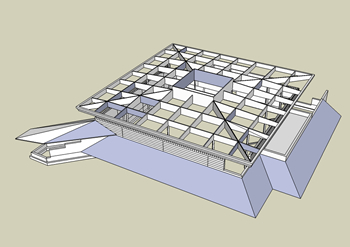
written in 2000 - edited/updated in 2008 and 2009 |
note: as of June 15, 2009 this piece is finished. However, it still requires some annotations [xx] and a few links to supporting material and some of that material has to be completed |
|
The
workplace we have today does not work. |
|
It
is a leftover artifact of the 19th Century - overlaid
with 20th Century tools - which projects a false modernism of stylistic clichés and overworked utilitarianism. |
|
It
has to be re-conceived and rebuilt to express human
values and to facilitate the kind of productive effort required
by local/global Knowledge/Design Economies. |
|
The
ideas, work protocols, design-build organizations
and manufactured products that dominate today are not designed to
accomplish this task. |
|
It
is time to wipe the slate clean and think fresh -
it is time to get to work. |
|
This
manifesto is an invitation to those that want to go
beyond what they have been able to do in the past
to take a quantum leap in the art and science
of making and using work-habitats.
|
|
This is a manifesto for the bold - not the timid. The change required will
not be an easy task. The tools are at hand yet
the old paradigm is still firmly entrenched. The system that produces what is, today, is composed of
financial protocols, corporate standards, building
codes, union procedures, professional enclaves and
cowardliness, entrenched user habits and organizational practices that are medieval at best. Remember, the
purpose of a system is what it produces. The purpose
of the design-build-use system that we have today
is the unhealthy and non-sustainable work environments we get. It is also is the global consequences which result from the sum of what is produced within these environments.
|
|
If
you want to change the results, you have to fundamentally
change the system that produces those results. Otherwise you are dreaming and will achieve at best - after arduous effort - obscure, marginal returns with a few built examples of partially viable alternatives. |
|
What
is incredible is that few I have met in 53 (as of
June, 2009) years of making
environments - as producer, user, investor - actually
like what is being built. From my experience,
the industry - if it can be called that - is full
of talented well-meaning people who want to do better and have the ability to do so.
But few feel that they can - or must - make a difference.
This Manifesto is for those who believe they must
make a difference.
|
|
Our
workplaces are unhealthy - mentally and physically.
They cost far too much. They do not facilitate the
work that must be done within them. They represent,
at best, our past - not our future. They express
the values of compromise, financial expediency and human exploitation. They are a mockery of any
reasonable concept of economy or ecology. They are
not efficient. They take too long to build and do
not even approach the kind of flexibility required
by today’s work and evolving market conditions.
They are not happy places.
They are not profound.
They do not demand
of us what we want to become. They do not make sense.
Yet, we spend a huge
portion of our life in these environments. This is called being efficient and practical.
|
|
Occasionally,
some great environments get built. They are rare,
expensive and usually don’t last long before
compromise and deterioration - fueled by user ignorance and expediency - sets in. The personal
costs of making these environments are too high. The
number of people who enjoy them - too few. It is great
to see them - and use them - but the total result is, to quote John Wayne,
“sorry don’t get it done.” |
|
Centuries
ago, architects learned to build well for the very
rich and privileged - and do so today for those who have
the means, knowledge and will to demand good work.
Building for the larger population - home or work
environments - other than generic “tract”
boxes remain a fantasy. Expensive, oversized “boxes
within boxes” to live in and minuscule cubicles
at work is the sad reality for most of the employed.
The poor take what they can get - millions exist in shanty towns and camps. A low average income
can afford the best personal computer system in the
world, a fine automobile and any number of competent
industrial tools - but not an affordable and healthy work of architecture without engaging
in a protracted, risky personal crusade. The system - composed of far more than mortgage corruption - which brought you the most recent real estate blow out, stands in the way.
|
|
There
are basic realities which measure the quality of any civilization:
personal security, health, food, energy, education,
housing, work, community, access. Access to opportunity,
art, alternatives. Freedom of thought and expression including the exercise of legitimate commerce. Architecture expresses, facilitates and shelters
many of these basic human requirements. Architecture
acts as an armature - it creates social memory of the past emerging into the future.
If architecture does not work, the entire set of a culture’s values and potential futures are compromised.
Architecture is not about pretty buildings for some
- it is about the environment that all experience. Architecture requires - and makes - personal wealth and commonwealth. By any reasonable standard, architecture - and architects - are failing. Most slog their way through a career with little satisfaction. Some find a niche where they can produce good work - usually unpublished and soon forgotten - while eking out a modest living. Some retreat to academia hoping to encourage a future generation. A very few become stars producing the signature works which often advances the art yet so often become a self parody and personal expression of meaningless, grandiose social gesture. Meantime, the sum of this work - a monument to mindless consumption - is turning Planet Earth into a human-made artifact - part glitter, part garbage dump - with no means in place to understand these consequences nor to design an alternative to them.
|
|
This
Manifesto is a criticism of the existing structure. And, it is more than that.
It is a call to “create
the problem” in a way that facilitates and
encourages authentic improvement. It actually is
possible to make a quantum change in the results.
How a problem is framed and defined determines what
is solved. Our built environment is a complex, systemic
problem. It will not be fixed by only fixing the parts.
The problems will be dissolved when the system
is transformed into a better system - and a better process for making habitat. This means creative places to work as the result of a better way of working which leads to better products and services offered to a sustainable global economy-ecology.
|
|
I
have invested 53 years in learning to build - the last
29 of these focused almost exclusively on
the workplace environment. Only the surface
has been scratched,
however, the results do support the claim that far better
work environments than we get today are possible.
The major elements
for defining the problem are known. There are many
viable, tested, alternatives to every component of
the problem-set. We are not lacking for many great
examples that have been produced by many talented
individuals and firms. We are lacking an effective
systematic way of working that spans the entire process
of producing and using architecture. We are lacking
the will to do it and a process of moving beyond petty competition to a global design-build-use practice capable of producing the architecture required to shelter the next generation.
|
|
Changing
market forces and work requirements present a new
set of conditions. The churn in the workforce and
the increase in wealth, for major sectors of our population,
adds more options. Advances in technology and
the industrial design arts create both enhanced means
and increased user expectations. The increasing - in frequency and magnitude - boom-bust cycles are early warnings not just of mismanagement but of the fragility and self-destruction of an entire economic paradigm. The instabilities
associated with these trends present a window of opportunity.
If we do not respond to this opportunity - with new
business and production processes, new concepts and
designs, and far more human and effective built realities -
we will have none to look to, but ourselves. |
|
In
the time that I have worked professionally, a
huge
portion of the built artifact, which makes up our
living and work places today, has been constructed. The
scale and
scope of this effort has been immense. It is nothing
compared to what is likely to happen, on a global
scale, over the next 25 years. It is in this coming
period,
that we have the opportunity is make a new practice of architecture based on new and old and better criteria. In this same period, more new materials and manufacturing
options will be created than in all the centuries
before. The essential question is if these new means
will be used to build temples of work or work-jails.
The outcome will have a profound effect on the
quality
of life - human, animal and plant - and on the sustain-abilty of our planet as
a living system. It will have a profound effect
on the kind of products that come out of the office
as the values and consequences of one are intertwined with the other in ways that contemporary theory and practice does not recognize.
|
|
The
choice to continue down a warn out path, or break new ground, will be made one building at a time. It will be made by design and building professionals, by institutions and corporations, by governments, by individual users. No one controls this system - we all do, and do not - and, in terms of a viable future, we are all failing. |
|
How
will you - and your actions - vote? |
|
click on pictures to go to projects |
| For those who wish to explore the ideas expressed in this MANEFISTO, the following projects document our progress, over the last eight years, in building human workspaces: |
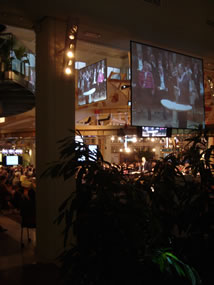 |
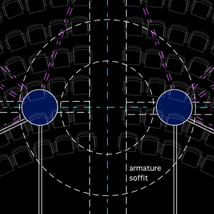
The Unicredit Project represents our most sophisticated design-build to date yet remains, so far, a disappointment in terms of the completion of the multimedia system and the use of the environment. Sometimes, we have found, it takes a navCenter a couple of years to begin the work which will allow it to reach its full potential. The space has been fully scheduled since opening day and this has provided little time for advancing the work processes. It has been called the most advanced meeting space in Europe and I think that is a fair assessment. A wide range of work modalities and processes are supported by an architecture which integrates a century of building types.
Masters Academy is the only navCenter in a school to date. This facility is used by teachers, students and community groups for both educational experiences and planning exercises. Masters is a small, intimate space with great flexibility allowing it to be configured in a variety of ways in minutes. It features light tubes which bring sunlight in what would otherwise be a dark, windowless, space while maintaining good insulation and the maximum use of walls.
Ales Groupe redid their offices, in an historic Milan building, is 2006. We provided a small navCenter and the CEO’s Office and “conference” room. This space can quickly reconfigure to make three different work areas expanding or contracting the CEO’s office as required. The navCenter space is used to design marketing campaigns and to conduct workshops for Ales Groupe customers.
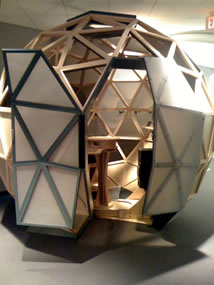
University of Virginia Medical Center’s Department of Radiology became the first prototype user of the mediaPOD. It will require the participation of several different user communities before the major interior configurations are designed. At present, the second mediaPOD is being built for the V.A. The mediaPOD is an enclosed space which facilitates the intensive use of many different advanced media applications: viewing media, creating and sharing it. It is a “room within a room.” It is the most recent of several PODs we have created over the last 10 years.
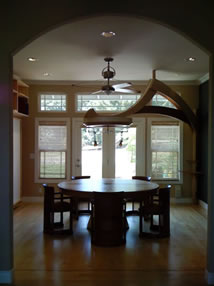
Leopard Conference Room serves the dual function as the formal dining room of his home. The Table rotates, has LED lights embed in the center which supplement the Armature Light above it. The room also has a fold out WorkWall which, when closed, is a setting for an art piece. The mood of the room can be adjusted for an intimate dining experience or a collaborative business meeting. The home office remains largely unsolved as standard office products do not fit well in domestic settings. |
|
UniCredit navCenter - Turin |
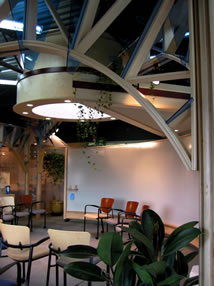 |
Masters navCenter - Calgary |
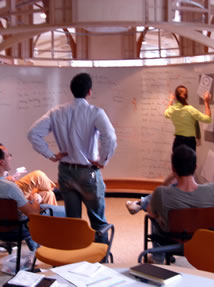 |
Ales Groupe Office - Milan |
 |
UVA mediaPOD - aa |
 |
Leopard Home Office - Sebastopol |
| In 2000, when I first drafted this Manifesto, I chose ReWorking the Workplace as a title in order to emphasize that it will take re-work to accomplish the objectives implied in the statement. Since then, eight (nine since the finial update below) years have passed in which we in the MG Taylor ValueWeb, have achieved much. A great deal of work has been accomplished, yet, the task ahead remains a long journey - in some ways our modest success, of 14 (now, 17) completed projects, has made it even longer. The promise has been made clear. Accomplishing the full potential of the promise lies ahead. As of the end of 2008 and beginning of 2009, we have more environments in production - design, fabrication, building and use transfer - than we have built over the last decade which saw the completion of more work than the 30 years before it. This increase in work has provided us the opportunity to build a variety of alternatives to the status quo this Manifesto critics. This work has been well received. No question that a new paradigm of workplace is slowly emerging. The mainstream, however, remains undaunted - it insists on narrow utility, UpSideDown Economics [1], and denies spirit and beauty. The people who work in Taylor environments know better - for them, practical means to be able to function as a productive human. We have proof of concept - now, it is time to scale. MG Taylor [2], AI [3] and TSM Architecture [4] will not be able to do it alone. It is time for a greater ValueWeb to form from the many efforts which are sprouting up around the globe. |
| The completed projects of the last decade are good works and I am proud of them. They begin to reflect an individual practice [5] of merit. They are not, however, socially significant. Nor, do they demonstrate but a little of the solution set which is both possible and necessary for the future workplace. They are loved by those who inhabit them, yet, I do not offer them up as the specific solution to the issues I raise in this paper. I do offer them as proof that an alternative approach can be successful - work like this can be built and it can be afforded. The negative aspect of the story is this: the effort to be commissioned to design and to accomplish these environments, and to facilitate their best use, has been far greater than it should have been [6]. The number, scale a scope of these works is not enough to make a major impact on the market [7]. There are signs that this is changing - the risk is that it will be - by far - too little - too late [8]. And, while the focus on the workplace is critical so to is the issue of affordable housing which - if it is possible - presents even a more dire set of circumstances [9]. The two, given changes in work/life-styles, and the complexity of economics, energy, transportation, cannot be separated out - each effects the other [10]. Architecture could have done so much better over the last generation - a serious look at the next generation, given our present habit and practices, is an exercise in despair. That is unless we focus on solutions and realize that we - as a ValueWeb - can “rebuild the future.” Some thoughts on the philosophies, policies, organizational architectures, and work-collaborative processes required to do this are outlined below [click on the graphics for links to articles]: |
HabitatMakers is a ValueWeb model based on a 21st Century version of the ancient craft guilds. Members of this web - practicing the rules-of-engagement outlined - seek to become the new “Cathedral Builders of the 21st Century. This will come about by practicing the correct blending of traditional and modern technologies, materials, methods and attitudes about building, the use of architecture and its social economics and ecology.
This approach to architecture and its practice is 180 degrees from today’s dominate paradigm and practices. There is much to be said for modern practice models, yet, as a whole, they have reached a dead end. When so much well meaning effort produces a planet in peril such as we have today my statement stands as an a priori truth. The purpose of a system is its output and the output of the system of human building is a dying planet, unhealthy humans, disappearing species of plants and animals, and an unsustainable energy-economics-ecology.
This is not to say that we have to reduce our standard of living. Nor, that the Earth’s population levels are too high. It is not to pit human against nature or the many other species on this planet. It is to say that the WAY we are running the Human Enterprise is ruining the Human Enterprise and that which sustains it.
The ValueWeb architecture is a fundamentally different way of doing the business of humanity. This architecture is not an assault on free enterprise - it is a structure-process to free enterprise while bringing to it a level of rigor which is requisite with the complexities we ourselves are creating and now face. Many point to the multitude of crises we have created - all true, all important. Yet, fixing each of these will not accomlish stability for we have created a crises generating system. Until we evolve a new system, we will jump from crises to crises until we run into one bigger than we are.
This new Paradigm and the new system to implement it, by definition,cannot be understood, designed and put in place in the traditional way. It is complex. It is emergent. The needed fundamental shift in the human enterprise is to become requisite with this complexity by changing our design strategy from one of “knowing,” command and control - to one of exploring, testing, building with feedback “of a complex kind,” and practicing the ethics of doing no harm.
Planetary Architecture requires a ValueWeb structure-process which will function with autonomy - yet be co-dependent - on multiple levels of recursion: community, businesses, towns, cities, bio-economic regions, “states,” globally - and soon, interplanetary. This requires self governance designed into these webs - not government from without. This is not any ISM which humanity has tried before.
The question is if Gaia will be considered a living partner in this venture or a dead thing to dominate and exploit - which has been our practice during recent centuries. It is “not nice to fool Mother Nature,” we are told in the famous ad, yet I want to suggest what we have been doing cannot be described as merely fooling around. Rape is a more appropriate term and this includes the Earth, its ecology and millions of humans thrown in for good measure. It is often quite pleasent to live in a modern industrial society yet not so nice to be forced to look at the realities upon so much of it is presently built.
UpSideDown Economics is the term-of-art I give this wholesale abuse of the fine science and art of true economics. In 53 plus years of work, I have run into few people who enjoy this rape, plunder and burn model of achieving livelihood and most, I observe, respect and enjoy the grandeur and beauty of nature. We are trapped in a system of thought and way of doing commerce which is fundamentally at odds with our professed values.
We are not Designing our future, we are thoughtlessly backing into it by default, Our two dominate global occupations are economic exploitation and the conduct of war. We do have other traditions which have shown a more benign side to human activities when they themselves have remained free from being co-opted for purposes other than their own mission. Among these I rank academia, science, engineering, medicine, education, the design professions, art, philosophy, mental and spiritual practices. All these bring a rich legacy to the human enterprise as does business which is truly business - not warfare by another means.
When NASA went to the Moon - perhaps for all the wrong reasons - Humanity demonstrated that it was capable of prolonged complex effort which required the resources of a globe and successful management of great risk, This is, at minimum, strong indications that we have the capability to address our systemic global problems. Looking at how NASA did it is worth while.
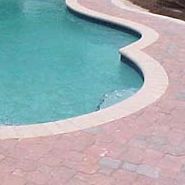
Swimming Pool construction the 60s, allowed me to look at and refine how an industry in a region did its business. We re-did the process from sales to service delivering a completed pool in one week at the height of the season. This was accomplished while reducing costs 25%, improving quality and significantly increasing the take home pay of the workers
This Design/Build/Use experience revealed the degree that construction is wasteful and the exact relationship between designing and managing the entire end-to-end process to quality and profits
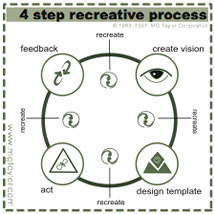
The Architecture by which architecture is done has to be redesigned. It no longer can isolate design from manufacturing and building. Its scope has to return: from furniture, to interiors, buildings, communities, landscapes, infrastructure to the planet itself In rethinking the work of architecture we will be recreating the workplace
The System in Focus is the first key determination in the design process. It is the task of the Program Statement to describe this clearly and defend it. Fail here and no matter how brilliant the work, the wrong problem will be solved. With the 2008 financial meltdown the focus is on fixing a failed system. On the tactical level, this is important. Failure to get to the systemic heart of the failure means we will repeat it again and again.
Good in the “bad” economy? Perhaps the model of continuous growth, which leads to such disaster when growth drops by a few percentage points, is systemically fragile. Perhaps 19th Century models and systems, which were held together with bailing wire through the 20th Century, are just not viable in the 21st. Since we have to go though deep change - why not make it good change?
We lack a 21st Century Agenda which is based on an open broad-based participatory process. Does the workplace have the memes or the means to help build a global social commons? |
|
|
HabitatMakers |
|
ValueWeb Model |
|
ValueWeb Mechanics |
|
HabitatMakers ValueWeb |
|
21st Century Organization |
graphic and link coming |
It was the Best of Paradigms and... |
|
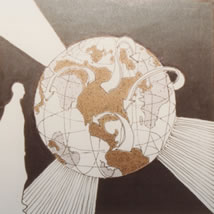
Planetary Architecture |
|
Gaia Project |
|
UpSideDown Economics |
|
A Future by Design, Not Default |
|
NASA Story |
|
Swimming Pool Method |
|
Design/Build/Use |
graphic and link coming |
The Architecture of Architecture |
|
The System in Focus |
graphic and link coming |
The “Good” in the “Bad” Economy |
graphic and link coming |
A 21st Century Agenda |
|
| This call, for ReWorking the Workplace, is an outline - an introduction to the subject. It does not address the manufacturing workplace or that of farming and construction [11]. It does not address conditions which the vast majority of humankind deal with every day as they seek their livelihood [12]. The focus of this piece, for this is where our experience is, is the office workplace of the “advanced” nations - those with the best conditions with the most options and opportunities. Even in its totality, the workplace is only one part of a global agenda which comprehensively addresses the challenges and opportunities we face as a species. It is a critical part, however. We spend a great portion our life in the workplace yet play little attention to how it effects not only our present well being but how it influences our work and therefore the future we will live and work in. If, with all of our wealth and technology, in the “advanced” communities, we cannot build environments which are healthy and support collaboration, creativity and the values we say we hold dear, what is the prognosis for our global future? The following documents describe ideas we have tested over a generation of work and illustrate examples of their application in real projects. Click on their graphics to access them: |
 |
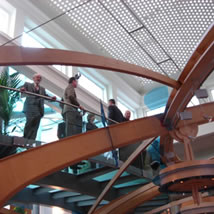
These three pieces are a walk through of several environments we have built over the last 25 years. The focus of them is to state and illustrate the principles we apply when we design these works. This work is the joint process of MG Taylor, AI, TSM Architecture and many ValueWeb members who come together on a project-by-project basis.
“Taylor” in this context does not refer to me as a personality nor as “head” of a team. It refers to a System and Method of Design/Build/Use processes. The philosophy and means by which we build environments are the same methods we employ when we use these environments and teach our clients to do so. All of it is based on a way of working the consequence of a generation long rapid prototyping research project.
We have focused on the workplace because it is in these environments that policy, products and services are created and, consequently, wealth. Also, it is the workplace where to results are most measurable and the cost benefit understood. Our goal, is to scale this work to all forms of building including Planetary Architecture itself. |
|
20 Years of Taylor Environments |
 |
UniCredit navCenter |
 |
Learning and Design Environment |
| To Challenge the workplace of the elite in the “advanced” nations - the place where it is perceived that the present agenda for the future world is being rendered - is in fact to challenge the social-economic paradigm of our time [13]. There is much that is good about this paradigm and we can celebrate the achievements of the last few centuries [14]. We must also be cognizant of the costs that millions have paid, and are paying for these gains and the systemic risks which we now face [15]. Our paradigm has run its course. It is time for a new vision of humanity and our future. This vision must incorporate the best from our last 10,000 years as well as our greatest aspiration for our future. This is the work of our time - our most important worthyProblem [16]. This work will be better done in environments which reflect the values we are seeking to achieve. It is more accurate to say that our places of work are the values we are projecting onto the world by the products and services we create within them as well as the symbols which these works directly represent. |
| A Testament is a work in progress. It is my attempt to describe what our journey into the future can be. Let us hope the reality we actually build will be better by every human measure and even more extraordinary. |
click on graphic to go to A Testament |
|
click on the drawing to follow the Johnsonville Project |
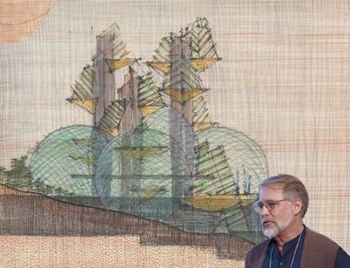
| As I write this, I am celebrating the completion of my 53rd year in architecture [17]. It has been a long path from the boy who stood in front of that door so many years ago full of expectation and hope. At this very moment, I am finishing for distribution the Design Development 3d Model of the Johnsonville Sausage navCenter - our latest effort at MGT, AI, TSM Architecture to build a viable alterative to the default status quo. This is a critical demonstration as we are doing the design, manufacturing the interior components and providing the Construction Management for the project. After a succession of meltdowns in the period that this piece was written: Internet blow out [18], real estate collapse [19], and financial markets instabilities [20] - which hopefully have provided some insight into over-hyped economies and tulip crazes - we may be retuning to a time when this kind of architecture can be built again. This is what I set out to do in 1956. Now, there exists a whole new tool kit to do it. And, perhaps a market which is ready. Even if not large - and I think it is - we have the potential to do one-off works almost anywhere in the world. Even a small number of early adapters, on a global scale, makes a huge potential opportunity [21]. The task ahead is to transform potential into reality. |
|
| This entry is the final statement for this piece. It is interesting that the first to the last entry spans nearly a decade. In the 1990s, the concept of the workplace came to a high level of maturity for us. This last decade has seen both the means of producing the work and numerous examples of it come to fruition. Now it is time to scale. Doing so profitably, and with integrity, is now the challenge. It is a nice challenge to have. As we expand our workplace practice, we are also preparing our first postUsonian living and home working environments for publication and sale. This is a tight coupling between these two efforts. We often refer to our workspaces as The Usonian Workplace as they share the same spirit and genesis: Simple, modest, beautiful works of art which are affordable and sustainable while summing up to a humane planetary environment. This is a worthyProject if there ever was one. |
|
Matt Taylor
Palo Alto
April 15, 2000

SolutionBox voice of this document:
INSIGHT • POLICY • PROGRAM
|
click on graphic for explanation of SolutionBox |
posted: April 15, 2000
revised: June 15, 2009
• 20000422.175944.mt • 20000423.123430.mt •
• 20000603.103751.mt • 20000816.425665.mt •
• 20010725.881985.mt • 20011001.349981.mt •
• 20050822.343423.mt • 20051001.545454.mt •
• 20081212.343414.mt • 20081214.555500.mt •
• 20090615.291092.mt •
(note: this document is about 96% finished)
Copyright© Matt Taylor 2000, 2005, 2008, 2009
Matt Taylor e-mail • 615 720 7390 |
|
|