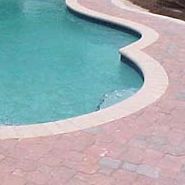
The
Swimming Pool Story

Building a ValueWeb
WITH a ValueWeb
|
This
documents the only (in my terms) successful organizational
structure I have ever been a part of. And, it was
only a partial success. The story goes back to a
seven year period, 1964 to 1971, where I was able
to work with a single industry and set of companies
through the entire process cycle of R&D, product
development, design, sales, production, service
and maintenance. This scope was more than what today
would be called a supply chain and less than what
I would call a full, mature ValueWeb architecture.
In going on 46 years of work, it shocks me to write
the only successful organizational structure...
I thought a great deal about the word only.
I decided to use it because it at least establishes
a marker - a minimum standard. There were several
organizations I worked with that were very well
run and fun to be with. Tishman principle among
them. I will argue, of course, that this was accomplished
despite their structure and for a limited period
of time also. The swimming pool era lasted only
a short period before it lapsed back into convention
- but then, it was not a true ValueWeb and that
also is part of what is to be learned.
|
|
I
sometimes think that I was born with a hypersensitivity
to organizational structure. This comes, I suppose,
from being an innovator who has never been satisfied
with all the explanation why doing things better
is impossible. As I dug into these
explanations, I discovered that virtually all
of them had to do
with organization and with the claim that profit
would be sacrificed by the new idea. I found this
not to be true. In many cases just the opposite.
Innovation can be made to pay for itself and if
it is done right nearly always will. No, organizations
take on a life of their own. They are not neutral
environments. This is good news - and bad depending
on the character of what is made. My insight was
to realize that organizations are DESIGNED
like everything else. They are human artifacts.
It seems to me that most think of them as facts
of nature - immutable. I discovered that
virtually
ALL organizational concepts are variations
on the same theme. There are not competing models
of organization out there - there are competing
versions of the same model. I was happy
to discover in 1961 and again
in the mid 70s that the traditional organizational
structure was not able to deal with the growing
complexities of modern life. The old way was going
to die. Since then, I have devoted a great deal
of my effort to discovering and designing alternatives.
I have also spent the greater amount of my time
helping traditional organizations stay alive. It
will not do to have them die before there is a
tested
alternative. This would be bad engineering and
very bad business. All this lead to the MG Taylor
Corporation
and a 25 year effort to get to what I now consider
the beginning phase of a genuine alternative
to traditional organizational architecture. In
the mean time, I discovered many other fellow traveler:.
Weiner,
Ashby, Beer,
Channon, Arbib, Boulding, Brand, Miller, Minski,
Bateson, Kauffman, Kelly...Their work in cybernetic,
systems theory and chaos theory has established
a powerful base. My work has been to put these
kinds of ideas
to work. Unfortunately, this work is just
beginning to be part of the business mainstream
and is still approached in a mostly metaphorical
(non structural) way.
How is you business like a rain forest?
Insightful, useful - but not enough. I have worked
to learn how to engineer organizational
structures as one would any other technical system.
This act is to INSTALL
an OS. We in the MG Taylor (proto) ValueWeb have
had some success in doing this. Enough to have
many
unique stories to tell - like the one that follows.
Enough to know that there is definitely something
to this and enough to have a health respect for
the persistence of the old way and its power to
compromise and reabsorb attempts to transform it.
Our present step is to build a true ValueWeb at
significant scale. This will be assembled, “bottoms
up” from a number of project-focused ValueWebs
that will find their own natural path to creating
a greater system. In period 2002 to mid 2004, there
emerged several projects as candidates for doing
this. Success with these will constitute a great
breakthrough. In
the
mean
time,
we have our own (MG Taylor) experiment and our
past project experiences from which we can extract
the knowledge
necessary for building every more powerful and
useful models.
|
|
In
the mid 80s, I created the Business
of Enterprise model to codify this experience.
I first called this model the Business
of Business
because of the question I asked: what is
the business of business? This may
seem like a simple question. At the time, the
answer
usually would be to make money. This
is confusing cause with effect. My answer was
that
the business of a business was to function like
the commissioner of Baseball that builds a network
of individuals and enterprises focused around a
certain set of objectives - a defined game.
Later, I realized that this pertained to enterprises
of all kinds including governments.
|
|
|
(insert
photo of Acacia presentation)
|
|
This
model is also closely related to the NASA
story which describes how NASA functioned as
a (partial) ValueWeb
enterprise when going to the moon.
|
|
In
the last 30 years, I have re-tested and applied
pieces of this organizational schema, the
F-15 and AEDC projects being the most notable examples
in terms of economic results. However, I have not
yet been able to get the whole
system in place, other
than for these isolated projects for a period
of time, as an OS for
the day-to-day operations of an entire enterprise
or culture of significant scale. The swimming pool
experience was itself incomplete, in this regard,
and functioned in isolation and only for a period
of
several year.
Withinn its own model of enterprise as defined
at the time, however, its scope was across an
entire
system
and it functioned at sufficient depth and integrity
to show that a remarkable organizational transformation
is possible that that this results in both human
and economic brilliance. It is possible, now, to
implement the The method and ValueWeb concept at
a sufficient scale to make a critical mass that
it will not be locally
reclaimed
by the
existing organizational mode that makes up our
social default.
This is possible because the tools of practical
networking (Internet, blog, wiki, KM method,
financial sophistication) are now sufficiently
developed so that isolated renegade (in the
eyes
of the establishment)
nodes can
be connected in such a way - and across the boundaries
of any discrete single organization - so as to
form this critical mass. The projects now underway
(as
of
April of
2004) and the over 30 Taylor-like Centers that
exist globally make up the bare minimum nucleolus
of this nascent ValueWeb.
|
|
For
the first time (post 9/11, actually), I feel
these evolutionary forces pushing the
MG Taylor Enterprise in the direction we have
always wanted to go. This is an idea whose
time has come to
quote Mr. Nixon in a somewhat different context.
The same
can be said for several of our clients. The default
model of organization, so long the ruling paradigm,
is finally coming under direct fire. It is, in
fact, rapidly crumbling
under the pressure of todays markets. I long
said (from 1975
and
onward) that no one gets out of the 20th
Century alive doing what they are doing now”
- This includes MG Taylor. The destruction of
the old organizational
model - and economic
model - is a factor of the environment (Rate
of Change and Complexity Model [link]) not our
wishes. The paradox is that MG Taylor has had
to live
in the old organizational world while building
a bridge to the new one. An uncomfortable and
often dangerous place to be. We have fallen victim
to these circumstances more than once.
|
 |
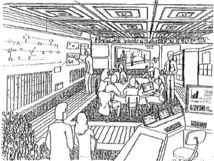
| Why didnt MG Taylor
become a full ValueWeb organization functioning
by the swimming pool rules
much sooner? |
|
|
The
answer is simple. It can be answered by asking
another question: why
dont our environments function with the
technology as illustrated on the cover of our
1982 Business
Plan? It is the difference between THERE
and HERE. You can never get too far ahead
of your own culture while remaining a fully integrated
member of it. MG Taylor is not some kind of Utopian
dream. It is not organized to function in semi-protection
as can be provided in a research organization or
university. MGTaylor is a business. This
was a deliberate choice. A where the tire
hits the road decision. The mission of
MGTaylor is ubiquity of a new way of working.
The measure
of success is to do this as a for-profit company
(in a ValueWeb) that delivers the GOODS,
makes money and creates shareholder VALUE.
This completes the entire Stages of
an Enterprise Model. As such, MGTaylor
and the core Business Units have been limited
by market as they have pushed
the market. Of Course, as a true ValueWeb process
emerges, market and ENTERPRISE become
the same thing. This is a true answer but
only a partial
one. There is another. The other answer is that
we did not know how to build MG Taylor
as a ValueWeb
from the beginning. We have tried several times
to make it have more value-web-ness and
each attemp
has been met with limited success. We were fairly
successful with the Producer Network
part of our Web, have had now and then success
with our
Client/Customer Network members and
almost total failure with the (would be) Investor
Network members. 2002, saw the beginning
resolution of the conflicting models of what
makes a traditional investment and a ValueWeb
investment.
This has
proven to be one of our most difficult tasks
- philosophically,
legally, operationally.
|
|
It
should be understood that a ValueWeb has several
levels of recursion in its structure. Conventional
organizations (on one level of recursion) can be
successful members of a ValueWeb structure. VISA
is an example of this. The company VISA was
structured and managed in a conventional way. The
network of alliances VISA was a ValueWeb-like
Enterprise and thus an example of a chortic organization
(on THAT level of recursion).
|
|
It
is also true that a conventional organization can
(and will often) have ValueWeb structure-processes
at levels of recursion within it. Startup
and joint ventures within a large mature enterprise
can be done this way. A (protected) NavCenter is
another example. This is a way to start the conversion
process.
|
|
These
partial ValueWeb structures can be effective
(but perhapts not permenant). The Model
suggests that a full ValueWeb architecture
operating (at minimum) on three levels of recursion
- made up of a critical mass of nodes that run the
ValueWeb OS - will out perform conventional structures
by orders of magnitude. They will require PatchWorks-like
processes to stay in tune and to optimise their
output.
|
|
This
piece is organized into four sections: (1) the STORY
itself which captures the experience. (2) Comments
on the Model, itself, which has never before
been put down in sufficient detail. (3) Application
to the MG Taylor enterprise Business Units which
are going through what I believe to be the first
real step to a true ValueWeb architecture.
(4) Application to other environments and projects.
|
|
Just
as DesignShop events have been our LAB for
developing the process and understanding the algorithms
for the Patent, our own business (and becoming
ValueWeb network) is a LAB for understanding
and demonstrating a new organizational theory. Our
own organizational experience is what we know the
most about - through direct experience. We also
have the knowledge gained by working with hundreds
of organizations and thousands of people over the
last quarter of a Century. Not all these partner
and client organizations were explicitly building
ValueWebs. They all DID, however, employ
some facet of our philosophy, methods and tools.
This work, plus our own developing theory and the
theory developed by others (usually, in unrelated
fields) has been integrated and forms the basis
for our system and method.
|
|
|
|
When
I encountered the swimming pool industry in Arizona
in the mid 60s it was already groping its
way to a primitive value web model. Over a six year
period we were able to develop this impulse into
an explicit system of work that today would be called
a value-added, mass-customized-product, just-in-time,
lean-construction (production), extensively out-sourced,
supply chain system.
|
|
Every
step from the customer meeting and sale through
financing, design, construction, clean-up, first
customer us and maintenance was developed into a
single system that cut more than 20% off of the
product cost and guaranteed delivery of the pool
(from sale to swimming) in 10 days at the height
of the season.
|
|
It
also resulted in a significant increase in quality
- aesthetic and mechanical. This completely refuted
the often stated principle that between reducing
time, better quality and lower cost you can have,
at best, two of the the three.
|
|
In
this system, as many as a thousand pool projects
could be tracked at once and the entire network
of construction crews coordinated minute-to-minute
over a twenty mile radius to accomplish multiple
work sequences on each pool in a single day. A fully
equipped swimming pool construction requires 23
crew (size of 1 to 6) hours over 9 tasks. When we
practiced by building a new display
pool we would typically start early Saturday morning
and be swimming Sunday evening.
|
|
Any
calendar time beyond 10 days and crew hours beyond
23, and work phases beyond 9 - in a typical swimming
pool - is waste. Waste that drives cost upward,
quality downward and the customer experience crazy.
Even a highly customized pool with many amenities
should add only small increments of time. In fact,
once I had this system in place with consumer pools,
I was able to build elaborate custom designs with
decks, trellises, extensive landscaping and often
screened porch additions at the same per-unit cost
structure and in the same basic time frames as a
production pool design. This was the objective of
the experiment. To demonstrate that - once good
practices are in place - custom design does not,
itself, in impose significant cost/time penalties.
|
|
Why
swimming pools? Partly it was opportunity. I had
designed some custom pools that the builders were
having trouble building. When I showed them how
easy it was, I was pulled into their industry. Why
I stayed with it was threefold. First, the swimming
pool as a piece of construction technology is interesting.
It involves most of the trades in discreet combinations.
It is heavy enough to require significant
equipment and organization. There is a high variety
of finishes and and many, many different conditions
that generate different design requirements. By
nature, the units are spread out, geographically,
generating significant logistical problems. Second,
they are production items in that, despite
a great variety of designs, the underlying structure
allows for the leveraging of volume components and
techniques. Third, the customer is intimately involved
but not dogmatic about the design and techniques
of building as is, traditionally, the circumstance
of house or office building.
|
|
These
are ideal conditions for testing new construction
and organizational methods. It should also be noted
that by the time I started this work, I had ten
years experience in designing, building and developing
housing, apartments and high rise structures in
4 states. I had personally performed every task
involved: R&D, sales, design, construction layout
and management, enterprise management and every
trade involved in the production of a pool.
|
|
I
knew every step and sequence. I had already discovered
that merely changing the sequencing of a project
could yield significant decrease in construction
time (motel for Royal construction, 6 months to
six weeks, as example). Also, I had a passion. When
I entered architecture, I was told that any
change in design drove unacceptable construction
costs. It was clear to me that the conventional
way of building was intrinsically more complex than
many of the suggested alternatives. Over the ten
year period, I both learned the trade and accomplished
significant cost/time reductions in conventional
building. I did this in ways that allowed for better
design to be accomplished. I was not satisfied as
were many architects of my generation to regale
builders, throw their hands up in the air and accept
high costs, poor construction and long delays to
completion as normal. I wanted to know why
and I wanted to know HOW to build better.
Imagine an artist who knows nothing about paint
and directs the creation of a work via
sketches and descriptions from a distance - that
is the condition of an architect in a traditional
practice model.
|
|
This
is important to would-be system integrators. DETAILS
are significant. Knowledge of the entire process
is a requirement. On very large complex challenges
- the F-15, as example - this means a sophisticated
System Integration Team and appropriate participation
of the entire ValueWeb membership. The F-15, involved
over 900 units distributed worldwide, operated by
several air forces. Each plane has 500,000 parts,
50,000 of which are unique. The system has been
maintained and evolved (upgraded) over a 35 year
period with the expectation of remaining viable
for another 10 to 15 years. Up to an many as 40,000
people, are involved in designing, engineering,
building, fielding, maintaining and using the system.
These circumstances result in a huge configuration
management problem. Complexity of this sort requires
GROUP GENIUS.
|
|
The
swimming pool system we put in place was simpler.
However, at its full expression, about 40
people were involved in the design and maintenance
of the process at any given time. Most of these
were the workers who built the pools.
|
|
Because
the swimming pool is complex enough to be nontrivial
and small enough to support what today we would
call rapid-prototying - and because there is clear
competition between contractors - this is an ideal
environment to demonstrate the efficacy of alternative
technical and process techniques. Feedback and innovation
was accomplished on a weekly basis.
|
|
Another
advantage is that, in the 60s, this industry
was not made up of sophisticated players. Generally,
most builders had learned by doing and were repeating
mistakes learned from those who taught them. This
was an industry ripe for learning. I
found out that it is easier to teach uneducated
people how to do it well than sophisticated folks
who are educated with every reason why
it cannot be done. In the end, we established a
system that had a true economic measure: at the
end of the week, everyones check told them
how well we had done. This was the only time in
44 years of work experience that I have seen a compensation
system put in place that actually worked, was fair
and encouraged both individual and group performance.
|
|
The
system grew organically. We worked with four competitor
pool companies over a 7 year period. One of the
companies we worked with, over a two year period,
through their entire startup process. We supplied,
at various times and in various combinations, the
following services: system integration, schedule
management, research in components, product design,
field supervision, subcontracting. At the peak of
the process we employed, ourselves, the entire ValueWeb
in the production of our own custom pools. We also
manufactured some low volume custom components.
Typically, we negotiated a new contract each year
and then provided our services exclusively to one
company for that period. This was also the pattern
for all of the subcontractors in the system. What
happened, then, was competition moved from between
companies to competition between networks. Networks
that resorted themselves every year. Thus, techniques
and methods migrated to all of the competing pool
companies. Competitive advantage was seen as a yearly
thing. Each subcontractor was very aware that they
negotiated, annually, for both revenues per unit
and for volume. The pool builders and the subs were
very conscious, each negotiating season, of trying
to attract the BEST TEAM with with to play
the season. They also worked, together, with intensive
collaboration to reduce, time, waste and cost for
everyone in the system - not just for themselves.
Competitive advantage meant how many pools could
be delivered, in a short season, at what price point
to the customer, with what features and for what
level of quality. Competition was fierce in season.
Sharing was ubiquitous between seasons.
|
|
The
customer truly gained in the process (which is a
rare thing despite all the rhetoric). Construction
workers achieved incomes as high as 30 and 40 thousand
dollars (in the 1960s) and the pool builders maintained
a gross profit of 25% unheard of in this industry.
The price of the pool dropped every year, the feature
set increased, time to swim declined radically and
quality (horrible when we started) soured.
|
|
At
the end, a 20 ft. by 40 ft. pool with automatic
cleaning, heating, copious amounts of decking, trimmed
out in a first class way sold for $4,000, was delivered
in 10 days (sale to swim) and was seamlessly coordinated
with other work such as landscaping, outdoor furnishings,
building additions and other objects: walls, planters,
gates, etc. The technique by which this was accomplished
is decribed below (The Model).
|
|
At
the end, I was able to build totally custom pools
at the same per-unit cost, using the same
contractors in the same time frame. Imagine a back
yard with a pool made up of four intersecting circles,
of different levels, a fountain rising up from the
intersection of three of them, raised, cantilevered
circular decks of concrete and laminated (4x6) redwood,
circular trellises offering shade, extensive landscaping
and lighting, custom enclosure walls (of complex
shape) and ornamental steel inserts and gates -
all build in 10 DAYS, in season for a complete price
of $7,500 (1970 money). This was the peak of my
capability as a designer builder). I have never
matched it since - the closest being the Cambridge
facility nearly 30 years later.
|
|
(insert
multi-circle pool design)
|
|
|
They
way that I accomplished this was by levering the
relationships and methods that I had created in
collaboration with the pool companies and subcontractors.
I produced a drawing (plan) of the back yard. On
it was the entire design. The price of each phase
of work was stated along with the schedule (date
and time of day) and a list of materials required
and crew and equipment necessary. The client (technically
acting as owner-builder) wrote me a set of checks
(in advance) for each phase of work. Each was in
an envelope. The contractors had learned that when
I said be here, at this time with these materials,
equipment and people that they could rely
on a clean site, proper layout and supervision and
INSTANT payment. They had no sales cost,
engineering time, bidding costs, scheduling complexity,
supervision requirements, and collection complexities.
All they had to do was divert a crew for an hour
(or a few) as specified and immediate contribution
to their bottom line was accomplished. Added benefit:
training for their crew by Matt Taylor. I was on
site each day, for all crew hours, managed my other
crews by wireless and then went on to other work
when that days sequences were complete.
|
|
On
the way to other projects, I did a couple of pool
layouts myself. This kept me in good physical shape,
connected to the business and paid for my salary
and truck. The money made from the rare custom and
fully featured back yard environments dropped
to the bottom line of our business. In this 7 year
process, work that typically was time consuming,
frustrating, expensive and risky because simple,
rewarding and profitable.
|
|
It
should be noted, that when I started this process
- 7 years before the example given - I executed
a custom pool and landscape of the same scope and
complexity (triangles instead of circles) and it
cost $21,000 and took three months - all considered
a financial bargain by the owner and a construction
miracle by the contractors at the time. This project
totally consumed me for four months. This last project
employed about 50 hours of my time (about half of
which I was able to do other tasks in my portable
office on site).
|
|
THIS
IS WHY I SAY THAT 75% OF THE TIME AND HALF THE COST
OF ANY CONSTRUCTION PROJECT IS TYPICALLY WASTED
- victim of the burden imposed by the organizational
structures, the contracts, the build process, design
ignorance and owner interference. This is a statement
of huge significance. It is also something that
virtually no one has wanted to hear in over 30 years.
|
|
The
cost and impact of building can be radically reduced.
This makes room for better design, higher quality,
more sustainable materials and energy solutions.
When we are told that these values cannot be afforded
this is within a game that imposes upon itself a
huge inefficiency tax. This requires, however, that
several circumstances be brought together over a
period of time: A steady volume of work. Total understanding
and rationalization of the building possesses. Trust
built up over a long period. Elimination of all
possible overhead redundancies. A knowledgeable
systems integrator on the site. Strict Rules-of-Engagement
totally enforced. Also, appropriate use of
technology. In this case, as will be elaborated
below, the first NavCenter and Motorola
wireless in every crew truck in the system. The
complete system has to be engineered - not just
the build part; this means, the engineering
of the pool as a basic product, the sales process,
the financing process, the drawing and contract
documentation process, the scheduling process, the
field supervision process, the field layout process,
the build process of each specific trade, the feedback
process between pool builder and trades AND individual
workers, the pool startup and turnover to owner
process, the relationship with the owner process.
Over a 7 year period, each of these processes were
refined through multiple iterations of work until
risk, mistakes and sloppiness of every kind was
eliminated.
|
|
This
was an eloquent system of building.
|
|
A
system that can be applied to many different
business and production circumstances.
|
|
|
|
The
swimming pool industry, in the 60s, in Phoenix,
was characterized by frequent bankruptcies of financially
unstable small contractors, sloppy work, a bland
product, time delays, high costs and a myth-based
selling process.
|
|
Any
attempt at customization from the standard rectangle
or kidney drove the costs through the roof. Coordination
with the many other suppliers and contractors necessary
to complete a back yard environment was almost totally
nonexistent. Cooperation was almost totally nonexistent
- and, were there was cooperation it was mostly
corrupt with back door payments, finders fees and
locked in deals all to the buyers detriment.
Owners were lied to, manipulated and ignored once
a contract was signed. Quality was unbelievably
bad. Often the pool was built in an easement leading
to law suites and expensive fixes. There was little
discipline in the system and the actual structural
integrity of the units were often compromised by
improper placement of materials. No one was making
much money. Typically, owners who signed their contacts
at the beginning of the warm season got to swim
in the fall. From end to end it was a sleazy process
dominated by suede shoe salesman - charisma and
high pressure substituted for engineering performance
and quality.
|
|
It
was not that people did not want to do better -they
did not know HOW. It was a circumstance driven
by ignorance. The BELIEF was that this was
intrinsic and things could not be approved unless
unbelievable amounts of money were spent.
|
|
As
example, when my first custom pool design -
which
had 16 corners, three levels and masses of custom
tile was bid for ten thousand dollars, I questioned
the builder. He said that it would take days to
lay it out and form it, that the lines could
never
be maintained after excavation therefore the design
would look terrible and the no one could do
the
tile work the way I had it designed (coming out
of the pool and over the bond beam). I pointed
out
the the actual materials of the pool were the same
as a typical 20 x 40 and he agreed but sighted
outrageous
labor costs. I asked him what would be the costs
if I did the layout, formed the pool, established
both grades and lines with offsets so the various
trade could re-string the lines at will when
building,
and, if I took care of the time myself - what would
be the cost? He gave me a cost 10% over a standard
pool (the 10%, he admitted, was for security.
Done I said. He asked me when I was
going to lay it out and set batten boards. I told
me the date. He said he would drop by sometime
to see the process. I told him he had better be
there between 8 and 10 am because I would be long
gone afterward. He refused to believe it but said
he would be there at 8 to watch my crew do the impossible.
Needless to say owner, pool builder with his entire
supervisory staff showed up at 8 and were surprised
to see the crew called Matt Taylor.
In one and a half hours the the job was done and
I had the layout contract for 2,000 pools. My sojurn
had begun.
|
|
They
simply did not know how to layout a swimming pool
accurately. Two to three inches deviation was considered
normal - straight lines impossible (see Layout).
Similarly, when it was time to do the decking (which
did not follow the pool but wove in
and out of it and the landscape), I started an hour
ahead of the crew pouring and finished by the time
they got the first section in (see: pouring concrete).
Easy. It is a METHOD or it is a disaster
- no middle ground in things like this.
|
|
They
wanted to know how all of this was achieved with
no dimensions on the drawing and I had to explain
what a module was.
|
|
As
for the tile, I went to the tile store, bought the
tile (about three times as much as for a normal
pool and custom (a total of 300 extra dollars).
The pool builder sent his time contractor over,
he looked at the pool, saw what I wanted and started
to leave the job. Fortunately, his truck was blocked
by mine. An more fortunately, I had a couple of
six packs of beer in my truck. And, lucky for me,
I knew how to lay tile (see: American Pool Building).
We had a great time, got really drunk and produced
a tile effect never seen before. The tile man became
my best advocate, worked out a fair price and became
the tile king of the NEW fabulous way to add accent
and color to your pool. Mass customization had begun!
He made a fortune of it and within 3 years refused
to do those puny bathtub installations
that once were the standard.
|
|
The
shape of this pool was not the way it was for only
esthetic reasons - although the result was spectacular.
The yard was narrow. Even a small kidney-shaped
pool could not fit in. That is why I was hired in
the first place. The conventional would not work.
I designed a zoned pool where the basic
functions of diving, swimming laps, playing and
sitting could all be done simultaneously without
interfering with one another (each has flat bottoms
at the best debth required for the function.. This
intent drove the shaping (which provided great variety
for design play and problem solving) and also allow
me to fit the pool into the narrow yard with out
removing all the trees (only one had to go) - another
owner requirement.
|
|
In
one stroke a new pool type was born. It became the
Tri-Level Pool, dozens, maybe several
hundred, were built and one pool salesman made a
career of doing only this kind of pool by copying
my custom pools and adding his own versions. He
got quite good at it. He also leaned when it was
important to bring the work to me (about one out
of ten as it turned out).
|
|
There
are several discreet lessens from this part of the
story:
|
Find
out exactly what the problem is. The trade
person knows what s/hehas been taught. If
not an innovative personality, s/hewill most
likely not challenge these (hidden) assumptions.
This does not mean that there is not skill,
talent, nor the desire to do better. The PRIDE
is usually there beneath the surface beat
down by years of UpSideDown Economics. Ignorance
(not a pejorative term) is ruling the situation.
Don't
teach. EXTRACT the critical part from
the system that runs by unforgiving protocols
with attending negative economic consequences.
DO the new procedure on a contractual, arms
length, Input/Output of the existing system.
Take the downside risks away from those in
the system. Plug your result back into the
system with minimum interference.
Put
the new solution into the system (transfer)
when people want it.
Let
everyone celebrate in the success.
The tile man; the salesman adapted the methods.
The Pool builder ran full page ads within
10 days of finish. The perception of the possible
shifted. The new became the standard.
First, as an option, ultimately as a main
line offering.
Understand
the specific technologies and skills
required to make the new process work - and
work economically. The old way may
seem stupid but it lives in a complex web
of interactions. The change can radiate out
in a myriad of unknown ways and negatively
impact a bunch of people. KNOW these
connections. Understand the end-to-end consequences.
Midigate negative results.
Know
when to innovate to what degree. This was
not my first pool. It was the fifth. I wanted
to do the Tri-Level design from the beginning
but waited until I knew enough of the industry
(in detail) and a clients requirements
demanded something other than the standard
schema. This presented the window for innovation.
My first pools were innovative designs in
many ways, but the bottom profile was a standard
slope.
|
|
|
This
one pool started a process that changed an industry.
There were several innovations for the time and
place: Cantilevered decking over the pool edge (no
coping - a new way of forming). Flat multilevel
pool bottoms (structural consequences, steel tying
changes, impacts on the automatic cleaning systems
and water circulation). Multi-sided shape of the
pool and syncopated decking (layout
and forming complexities). Tile instead
of decking over part of the pool (bond beam) perimeter
(requiring exact bond beam geometry and workmanship;
replacing large tile pieces with mosaic tile - not
a standard at the time). Integration of the pool
with the house and landscape (issues of grading,
water run off, leaves in the pool, access from the
house, safety concerns).
|
|
Each
of these potentail impacts had to be addressed.
|
|
It
turned out that there were only a (real) few blocks
between a mundane design and an exciting and far
more functional one. Those blocks could be removed,
by removing them from the traditional process, demonstrating
how easy it was to do the work and then transferring
the process back into the common protocol. An architect
that never gets out of the drafting room cannot
do this. When THINK work is separated from
DO work all kinds of unnecessary barriers
result and cannot be resolved. I was able to do
this because we were a design office AND
a contracting firm. We were also willing, when necessary,
to do R&D by absorbing these R&D costs and
guaranteeing to the owner we would replace any thing
he did not like (or did not work) after he had USED
it awhile.
|
|
(insert
Tri-Level Pool plan)
|
|
|
The
organizational transformation process is accomplished
on the level of the organizations products
- not management. Extract, do, demonstrate, transfer,
explain the principles at work - in that order.
|
|
The
MG Taylor Enterprise Application
|
|
|
From
1979 to 1982, Taylor Associates (now MG Taylor)
created the basis for the work it is doing today.
The Weak
Signal Research and philosophical base had been
laid down 1974 to 1979. In the first three years
of its existence, MG Taylor built its
first environment,
developed the basis of the Modeling
Language, created and refined the DesignShop
process,
fielded an RDS
experiment and operated the first client NavCenter
(Mentor Corporation). We formed a corporation, created
a Board of Directors, received investment and sold
the company. The beginnings of a ValueWeb was established.
We serviced a small, national client base of medium
sized organizations.
|
|
From
1982 to 1985, the Acacia years, the information
factory concept was refined. We concentrated
on one client and its customer base enjoying,
for the first time, steady revenues and a budget
sufficient to staff beyond what was just required
to produce client work. What is now AI
stayed in Boulder as a network member organization
and was not reintegrated until the early 1990s.
It was in this period that we gained the operational
excellence required to deliver our service products
at volume and profitably. On an event basis, we
have been profitable ever since. In terms of an
organization, overhead to operating profit, we have
been profitable, break-even and at a loss, annually,
in approximately equal shares. In total, we have
accumulated a loss of about three million (out of
42 million revenues). With a total capital contribution
of about 500 thousand dollars this means the entire
cost of creating our products, service and the four
business units that deliver them has been less that
four million dollars. In 1999, we had a valuation
of 10 million.
|
|
The
sale of the business to Acacia involved some breaking
up of the organization but most of it stayed intact.
The piece that spun out later came back
in. When the enterprise as a whole left Acacia this
was the first time it was somewhat shattered. Most
KnowledgeWorkers, the archives and physical facilities
stayed inside Acacia. The principle gain of the
Acacia years, besides financial stability and the
refinement of operations, was the opportunity to
work with a moderately large organization though
a protracted change process.
|
|
1985
to 1990 were the ad-hoc years. The enterprise
functioned as a network, had no fixed assets, did
not market and worked predominately inside large
organizations such as Capital Holding and GM. We
used the Acacia
Center (that we had designed for them) as a
place to do infrequent events. We later took over
this Center and operated it for a couple of years.
The Capital Holding relationship exemplified our
pattern of work that lasted until 1995: we did a
DesignShop process focused on some specific problem
(in this case, a merger), build them an environment
(in this case two, one in 1997 and a larger facility
in 1992)
and facilitated their process through a multi-year
transformation process (1987-1994). there were usually
three of us as overhead and a network of about 15
to 20 KnowledgeWorker that performed work on a contract
basis.
|
|
1991
to 1995 continued this same operating model
with the exception of the OMC environment which
operated 1991 - 1992. The OMC had a staff of about
six. It operated at a profit the first year and
a loss the second. The market was not strong enough
to sustain long term growth a pattern we experienced
again with the Hilton Head knOwhere Store. However,
like Hilton Head (1996-2001), the OMC was key in
launching several relationships and parts of our
evolving enterprise and therefor was profitable
on the scale of Enterprise (as every environment
we have built for ourselves has been). In the case
of the OMC, it facilitated our relationships with
the Car Rental Industry and the US Air Force. It
was in this period that several pieces of our enterprise
started to coalesce. The RDS was reintroduced and
became the principle delivery system of our work
in 1995 (and only this one year, to date, which
is a significant point). The relationship with the
Air Force followed the Capital Holding pattern only
on a much larger scale - we built them an 8,000
square foot environment and did over 40 DesignShop
events in the first year. The core overhead of GMT
stayed between three and six, usually three hundred
thousand a year. The Home Office of
MG Taylor, 1993 to 1996 was our 800 square foot
Sea
Loft. We generally established apartments at
client locations with a principal on site - a pattern
that remained in place through 2000 (and is very
like to reoccur). The Air Force work was as sustained
engagement that afforded MG Taylor steady revenues
and the opportunity to work on large-scale, complex
systemic issues that effected global systems. It
directly lead to our NASA work. Between 1987 and
1999, I spent over 80% of my time on the road.
Annual revenues in this perion ranged from 600 thousand
dollars to 1.7 million. The full life cycle of first
serving a client in one of our environments through
transfer of the system and method to them, involves
four distinct phases of work each requiring very
different kinds of and levels of effort on our part
and each phase has radically different profit margins.
The profit margins do not necessarily directly relate
to the work loads or even the theoretical value
of the work. They are provided my the clients
perception of value and this changes from client
to client and time to time - even, from region to
region.
|
|
It
was 1996 to 2001 that MG Taylor laid the
foundations of a standing business.
In this brief period, MG Taylor (and now, knOwhere,
Yolke, AI, iterations) has gone through several
classical phases of development, de-evolution
and recreation. This was highlighted by the establishment
of the knOwhere Stores (Hilton Head 1996, Cambridge
1997, Palo Alto 1997), the relationship with EY
(1995 - 1998 and the sale of the Cambridge facility
to them), the integration of AI (1996) and the establishment
of our own production facility (1998), the peak
of our employee base (over 30 in 1998, 20 in 2001
across all Business Units), the creation of separate
Business Units (1999) and revenues fluctuating between
5.5 and 9.9 million per year. Through out this period
our structure was a hybrid of traditional corporate
structure, extreme outsourcing to the network, extensive
partnering with a larger company and extended virtuality.
This has been a high performance organization in
product/service delivery and unstable in traditional
management.
|
|
It
will be 2002 and beyond that the true ValueWeb
structure will emerge and grow. This will follow
the ValueWeb Model, employ the Swimming Pool
engine with MG Taylor developing a portfolio of
enterprises employing the NASA
Method. If MG Taylor will remain the Systems
Integrator of this web or a larger played within
it is a question that remains unanswered. What is
clear is that both roles are often in conflict.
This has interesting implications for the application
of ValueWebs to traditionally owned corporations.
Our present (February to March 2002) default condition,
is that we are still involved in both roles and
looking at our many options for moving forward.
|
|
It
should be noted, however, that we have been profitable
- and not - in each of the eras (other than 1979
to 1982) and that there are simple correlations
to be found, among the many variables, that drove
these results.
|
|
Chief
among them, of course is the ratio of fixed overhead
to net revenues. This is determine by volume and
our ability to scale up and down quickly enough
to keep our ratios in line. This issue is made complex
because our product/service delivery shifts rapidly
in both location and in what our customer/clients
buy. This last factor is caused partially our lack
of critical mass but more from the nature of our
market. For example in 1995, our revenue was mostly
generated by DesignShop events delivered by RDS
deployments to several clients all over the US.
In 1996, the majority came from one client (EY)
delivered primarily in the Hilton Head knOwhere
Store. In 1997 and 98 mostly DesignShop events from
one client (EY and their clients) delivered in our
three knOwhere Stores, two EY environments and one
client NavCenter. In 1999 and 2000, a number of
different services including three NavCenter transfers
to a diverse client base delivered through the Palo
Alto knOwhere store and from within the client NavCenters
in several states. During this period, direct AI
WorkFurniture sales became one third of the business
involving large environment sales one year to a
few clients and many small environment sales the
next to many clients all over the world.
|
|
In
this same period, we entertained three serious merger/purchase
options and two large joint ventures. While some
of this is the consequence of being a small business
in start up most of it is the consequence of a highly
volatile market. A true ValueWeb architecture will
mitigate some of the impacts caused by this volatility.
This will move the impacts away from the operating
business level to the web-enterprise level were
traditional market volatility is better dealt with.
|
|
The
Swimming Pool Model evolved to deal with certain
circumstances: seasonal fluctuations, economic cycles,
wide geographic distribution, time-demanding buyers,
a design-focused product (mass customization), a
new product (low cost consumer pools), fast growth,
untrained workers, quality issues, brand competition
and the integration of multiple products/services
from multiple organizations. These circumstances
match up nicely with the circumstances of the MG
Taylor Corporation and affiliate corporations. These
circumstances are widely shared among industries
and organizations of all kinds all over the world.
|
|
|
| The
lessens from the Swimming Pool Story that can be applied
to different situations are many. |
|
|
Matt
Taylor
Palo Alto
March 8, 2001

|

SolutionBox
voice of this document:
INSIGHT POLICY PROGRAM
|
posted
March 8, 2001
revised
February 18, 2002
20010308.451948.mt 20010313.293455.mt
20010324.452876.mt
20010330.208844.mt 20010331.987723.mt
20020217.298700.mt
Copyright©
Matt Taylor 2001,2002
|
|
|