with annotations from a 28 year perspective | | I lived and worked in Kansas City, from 1971 to the mid-point of 1979. This is the longest period that I have ever lived in one place. I moved to Kansas City after a personal and professional disaster that is described elsewhere and outlined in Vol. 1, No. 2 of Renascence Reports. | | In 1975, I gave my first Redesigning the Future Course and this lead to the founding of the Renascence Project the following year. The Renascence Reports Started publication in July of 1977 and continued, with some interruptions, through July 1998. I believe there is one more issue that was published in early 1979 but I have lost track of it. | | The Kansas City years were fruitful and lead to many fundamental shifts in both my philosophy and how I came to conduct my life. The Renascence Project was not successful and finally ran out of steam about a year after Gail and left Kansas City, however, the nascent ideas that lead to it - and emerged from it - have continued to grow in my mind and work. They are now, nearly 30 years later, beginning to find expression in the real world. We were perhaps naive in these years and lacking the resources and experience to do what we dreamed yet time has shown that the intention was right on target. There were three intellectual products, several design concepts and one major take-away that came out of these years. The products were the Redesigning the Future Course [link], the design concepts included the Master Planning Process [link], megacity formulations [link] and co-housing designs of various types [link]. All these were conceived to be parts in a design-build-use [link] rapid prototyping process [link] that progressively built larger projects until large scale human earth-based habitats [link] were possible, as well as, space colonies [link]. The Renascence Project was conceived to do this. Right idea, premature by a generation [link]. The major take-away from the Project was that humankind needed a completely new kind of infrastructure in order to successfully facilitate transformations of this type and scale. It is the building of this infrastructure that Gail and I set out to do with MG Taylor Corporation. | | This is why I consider the Renascence years to be iteration1 of the MG Taylor experience that followed them. In many respects, we have gone full cycle in the 30 years since Renascence was started. The course, now, ReBuilding the Future, is being reconstituted [link], many of the issues that the Project focused on are now commonly accepted social causes and the specific projects are becoming feasible. The scale and rate of change that the Project forecasted has certainly taken place with a mixture of good and bad results. MG Taylor has the METHOD that was missing and necessary for integrating the diverse forces that made up Renascence while still leaving them free. The ad-hocracy we were trying to build then is now understood as a ValueWeb[link] and, while we are at the beginning stages of employing this organizational architecture, we know a great deal more about the underlying theory and practice of networks which makes it up. And, we have a shop [link] for prototyping and limited production - something that we tried to do but never accomplished in the Renascence years. In retrospect, we are still prone to some of the same habits that lead us to periodic organizational confusion and economic stress. My annotations will explore these along with the rest. iteration6 [link] is our transformation to a true, full scale, functioning ValueWeb architecture - an emerging understanding but a goal that goes back [link] long before Renascence. | | Renascence Reports are here re-published, as having value in themselves, and as a tie to many seminal early experiences that not only lead to MG Taylor but remain primary goals to this day. By exploring Worthy Projects [link], you can see this legacy. An extensively annotated full screen view of each page of the index connects the past and present to the future we continue to work to bring to reality. | | click on each page for full screen view | NOTE:
# 1 is misplaced anyone with a copy please
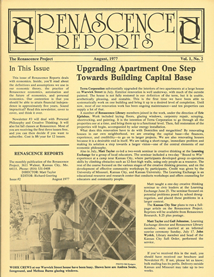
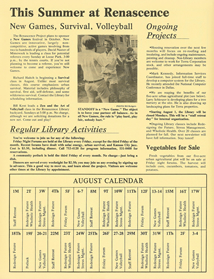
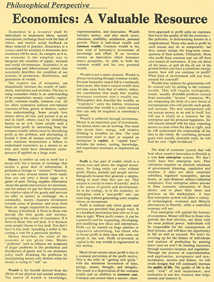
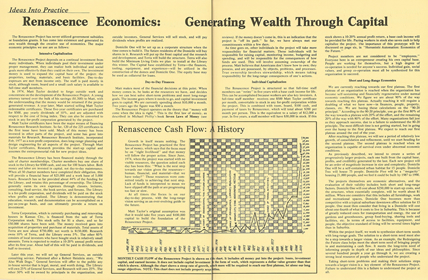
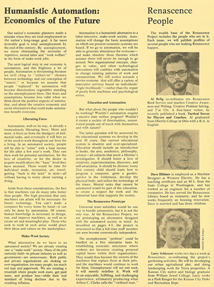
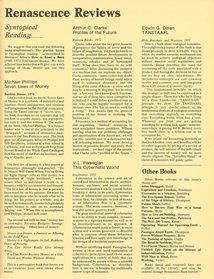
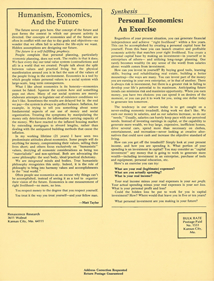
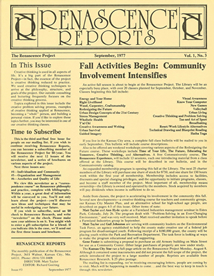
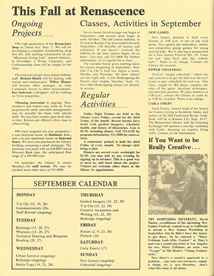
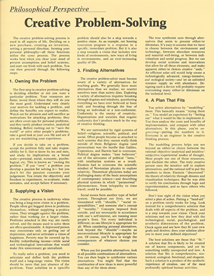
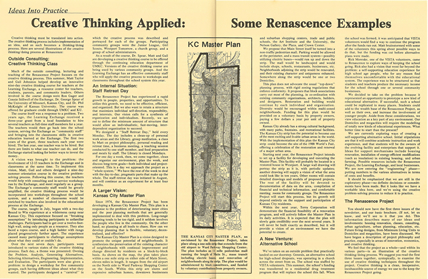
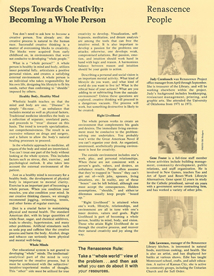
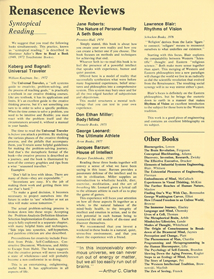
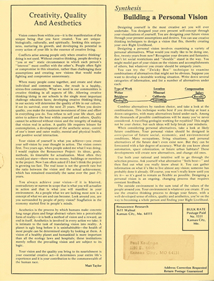
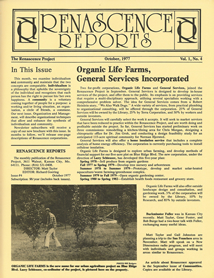
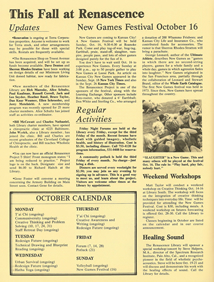
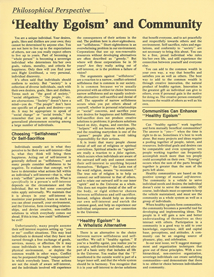
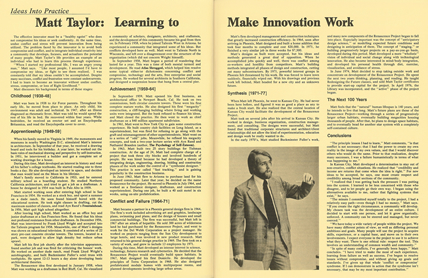
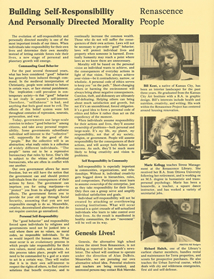
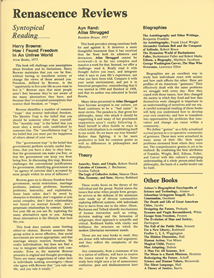
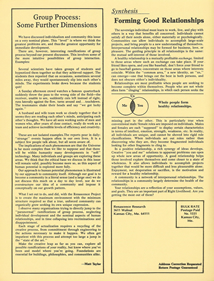
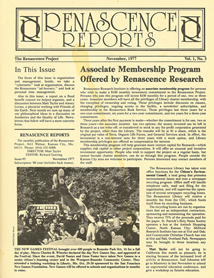
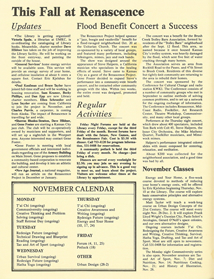
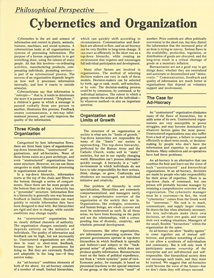
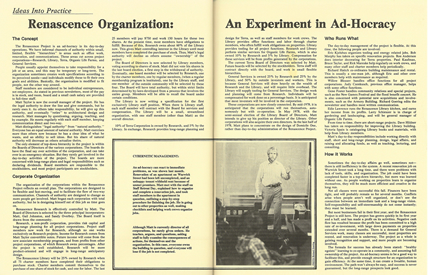
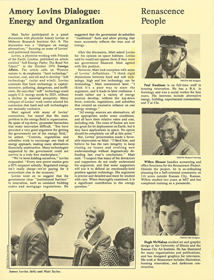
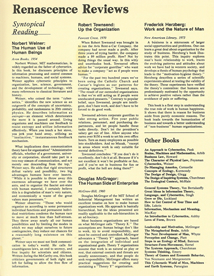
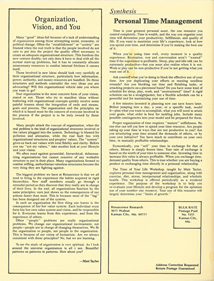
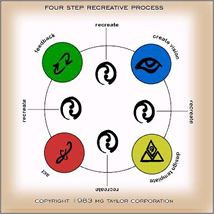
notify me | | Page 4 & 5 - Centerfold: aaaaa | Page 4 & 5 - Centerfold: aaaaa | Page 4 & 5 - Centerfold: aaaaa | Page 4 & 5 - Centerfold: aaaaa | | The first five issues of Renascence Reports cover the basic idea of the Project and its time of initial growth. The next five issues document the ambitions of the Project and our struggle to find the right match between resources, projects and (new) organizational ability. Issue #10 highlights an organization attempt (that ultimately did not sustain) and the question of success or failure. It also documents the circumstance of Renascence starting to have influence outside of Kansas City. | | Below are some thoughts on the examined life, the role of documenting the journey and the process of bringing new ideas to reality in a society that is indifferent and even hostile to many aspects of them. Following this is a link to the next five Newsletters. | | | Living a self-aware reflective and active life requires constant reevaluation - and recreation [link]. Many people have one years experience 50 time. The better practice is to have 50 years experience 50 times. | | Scanning these Newsletters, rereading them, putting them on the web site and making annotations is a way of connecting the past to now and to the future yet to be. Julian Jaynes but forth the model that consciousness as we experience it emerged as a consequence of writing [link]. He believes that the act of making a thought something external and tangible and then experiencing this product as a reader provoked awareness of mental processes, thus, consciousness of self. Be this historically true or not, the practice of documenting one’s life and actively reviewing, appraising - and reusing-mixing - this “old” material with the new, certainly is an essential tool for living the “examined” life. | | The most critical aspect of enterprise development is the timing. Heilein said it this way: “when it is time for railroads, people build railroads.” The difficulty is in knowing the timing. We went to the mood far sooner (less the 70 years after the first successful manned flight) than was expected and then dropped the ambition to develop space for more than a generation. The timeline presented in Vol. 1, No. 7 was aggressive but not impossible. Humanity “voted” on another coarse. Gail and I, ourselves, did the same thing in starting MG Taylor Corporation which took us away from these specific projects while we invented a tool for support all projects of this kind. We did not do this because there was no market, in the late 70s, for the projects, we did it because the Renascence experience informed us that there were many process and organizational capabilities missing from the humanity’s tool-kit. | | One of the risks of being an entrepreneur in the business or social realms - let alone in both - is to keep moving on with the “successes” and to abandoned the “failures.” Success or failure cannot be understood in an immediate time frame. the reasons for success or failure are many and complex. The “lessons” extracted from the experience have to be carefully thought through. Ideas and there expressions in products and projects have latency. It is critical to “go back” and to keep bringing them into the present and future. Each will come in its own proper season. | | I choose Renascence for the name of the Project because I wanted to stress the active meaning of the concept: not rebirth but constant re birthing. I did not know if the Project would work - or not. I certainly did not know that it would take 25 years after launching MG Taylor before we would see the first evidence of real success in our terms. None of this matters. What matters is that the ideas that past the test of time are not forgotten and they are constantly reinvented until organization, idea and social reality become requisite. | | | GoTo part two of Renascense Reports | | | GoTo: Renascence Reports
Index - part two of two | | | | | Renascence Era Notebooks
1974 to1979 | | | | | | Dome Dwellings and Workplaces | | | | | | Domicile One - CoHousing Alternative | | | | | | Kansas City Strip and Master Plan Process | | | | | | Matt Taylor - Hand Written Notebooks Index | | | | | | Planetary Architecture - The Case | | | | | | Steinmeyer House - off the grid - first try | | | Matt Taylor
Elsewhere
July 19, 2005 | 
SolutionBox voice of this document:
INSIGHT • POLICY • PROGRAM |
posted: July 19, 2005 revised: July 20, 2005
• 20050705.667621.mt • 20050720.879956.mt •
• 20050721.111100.mt • (note: this document is about 50% finished) Copyright© Matt Taylor 1977, 1978, 2005 | |
|