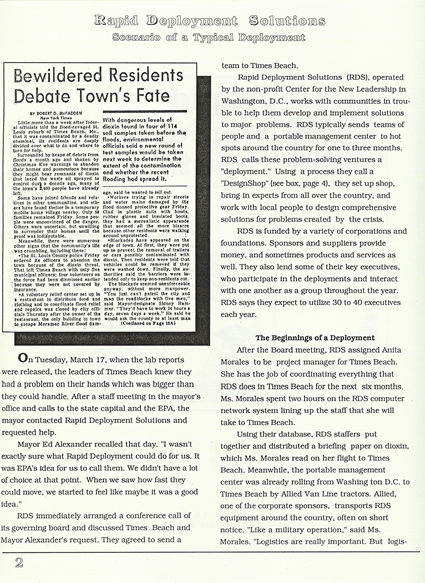
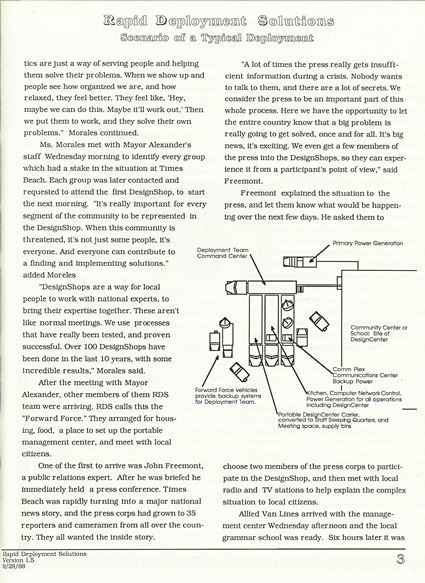
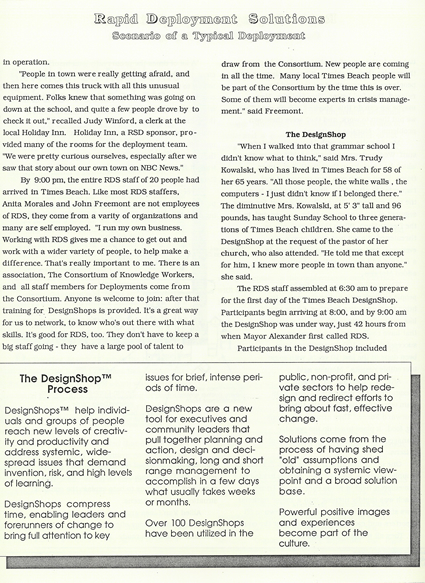
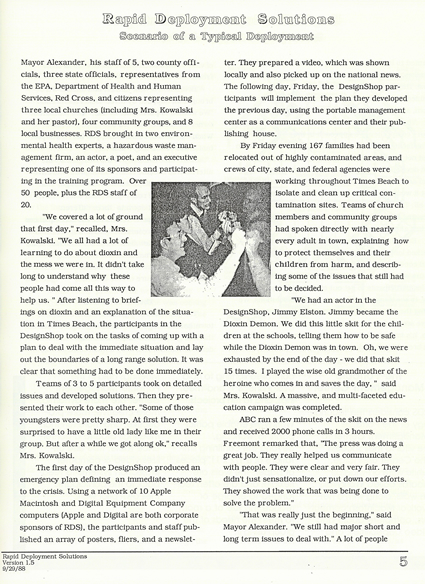
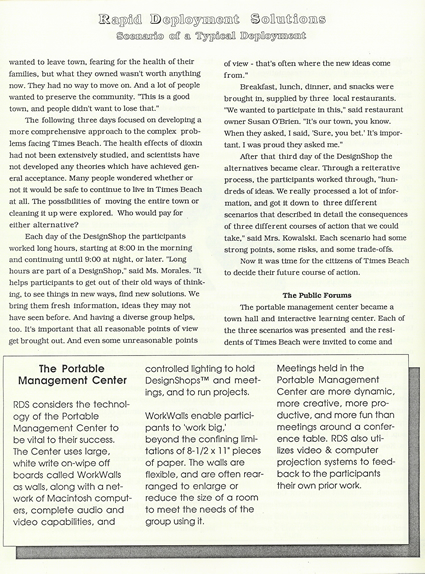
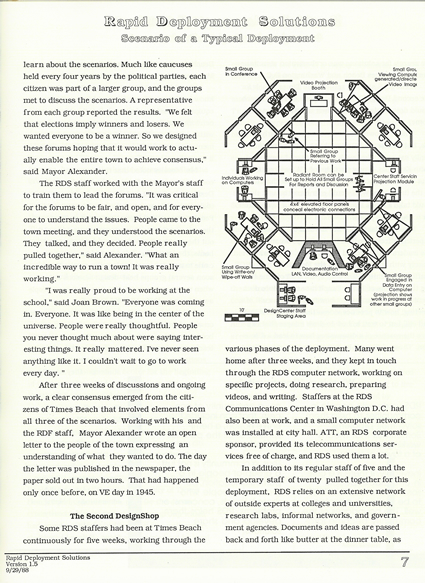
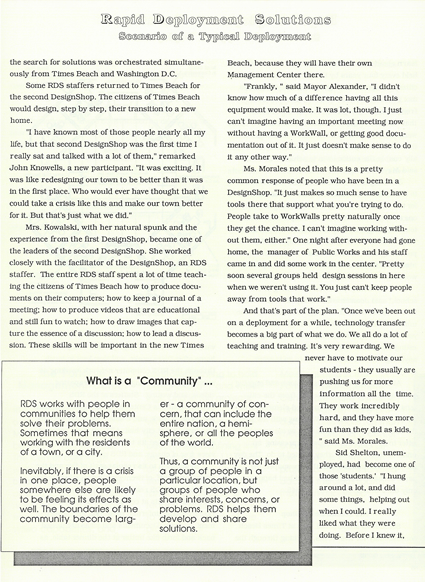
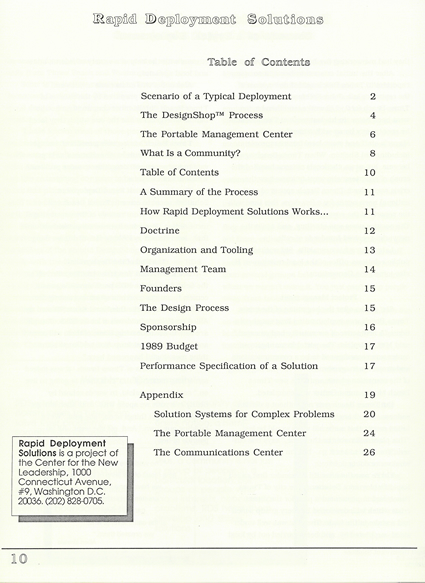
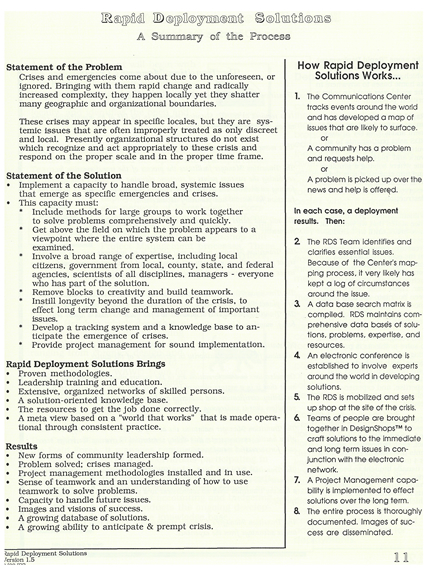
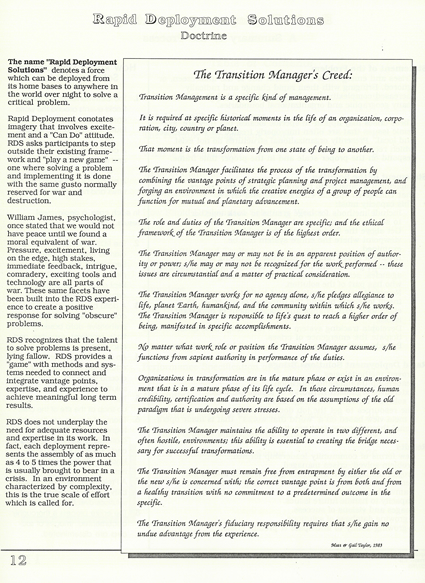
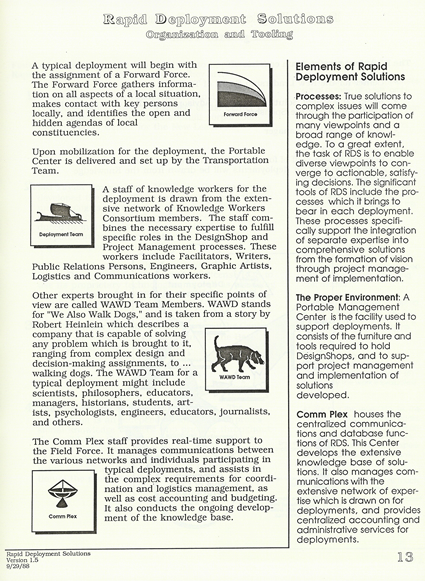
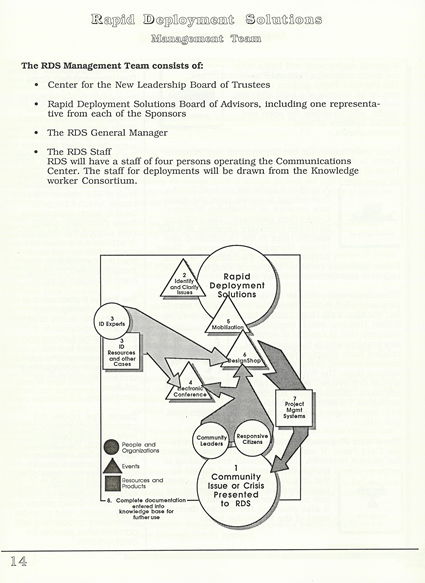
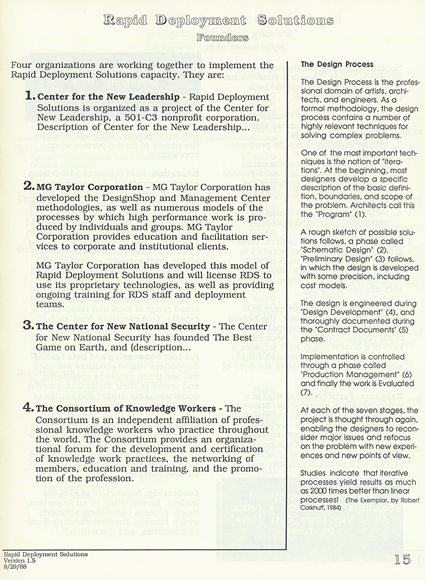
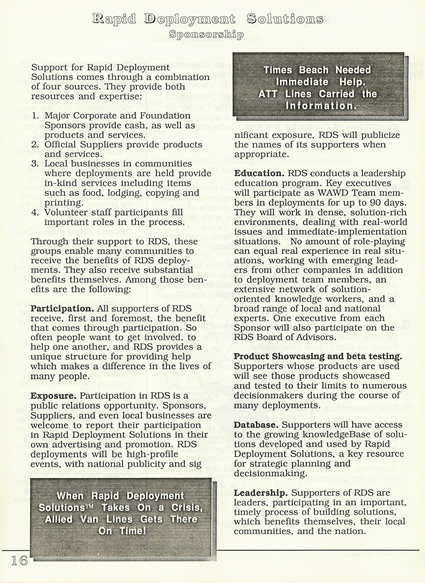
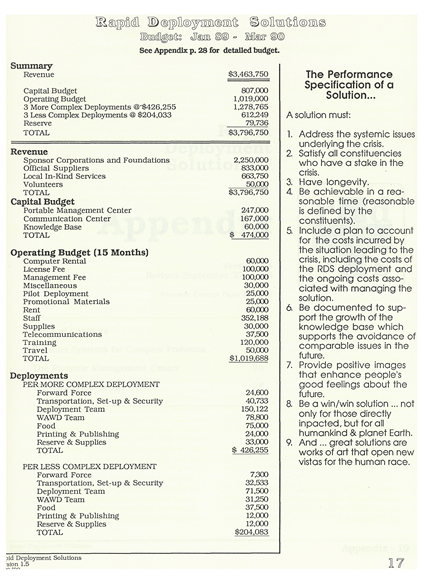
| This Concept Paper was written by Gail, myself and Langdon Morris in 1988 in response to a non-profit in Washington DC that was interested in the RDS. It is a revision of an earlier version, drafted in 1985 and updated at the beginning of 1988, which was based on my 1983 concept as documented in my Notebooks. [link]. The icons used throughout this proposal were developed by Bryan Coffman [link]. | | What follows is the 1988 paper [version 1.5] with new annotations that further expand on the concep and set it in today’s context. | click on the pages to get a larger view | | | I always liked the icons that Bryan did, esthetically, however I have always felt that they presented the the concept in too narrow of terms. In fact, this entire paper does this. Everything it says is valid enough but it does not convey the scope of the systemic global issues that the RDS can - and must - deal with. We crafted this Paper to the times and the requirements of the proposed non-profits, in Washington DC, that were to be the host organizations. These was nothing wrong with their focus or concerns, it is just that they do not approach the full scope of the RDS Concept and possibility. This Paper is best read in the context of the MG Taylor Mission [link] and, of course, taking into account what has happened in the 16 years between its writing and today [link]. | | | | The article on the left is from the NY Times and it is what sparked the original RDS concept [link] in 1983. The critical aspect cover in the page is that the RDS has to have a standing office and the capability to deploy within 24 hours. As will be covered elsewhere, in time this capability will integrate prior deployment experience with Weak Signal Research [link] to create an anticipatory capability. | | | | These functions are done routinely today in commercial RDS deployments. The practices are well established. | | | The stewardship of theRDS concept remains in MG Taylor hands. This Concept paper was originally written in response to an indication that several non-profits were interested in sponsoring the program. As it turned out, nothing happened. There were two “almost” deployments in the following years. One was for the baseball strike and the other to look at ecological consequences of the first Gulf War. Both stopped one phone call short of the final decision maker. The RDS still needs a home. I believe the MG Taylor ValueWeb is ready to take this on and that there are non-profit and for-profit opportunities given today’s circumstances and marketplace [link]. The Consortium of Knowledge Workers remains a dream and there are several hundred KnowledgeWorkers dispersed around the globe who do this work on a regular basis. | | | | The value model for participation is as valid today as in 1988. Today, there is a great deal more data to back it up. | | | | These numbers are 15 years old. Depending on scale and scope they can be double these today. It would not necessarily take all of this investment up front. When the Pater was written, there was no functioing MGT Center at the time. Now there are over 30 MGT client NavCenters and ASEs in the US, Canada, Europe and Asia. There are several RDS units although none are configured for the kind of scenario described in this Paper and none are the current state-of-the-art. The RDS being prepared for the WEF Annual Meeting [link], and other events in Europe [link] will be the closest to what is required and what was envisioned. In other words, the investment will be higher today but some portion of it has aready been made. | | | go to
APPENDIX for the last 9 pages of this Paper | Matt Taylor
At Elsewhere
October 23, 2004 
SolutionBox voice of this document:
INSIGHT • POLICY • PROGRAM | |
posted: October 23, 2004 revised: October 26, 2004
• 20041023.345000.mt • 20041025.342981.mt•
* 20041026.700128.mt • (note: this document is about 55% finished) Copyright© Matt Taylor, 1982, 1983, 2000, 2001, 2004 IP Statement and Policy | |
|