knOwhere and Community
A Shifting Context in Palo Alto
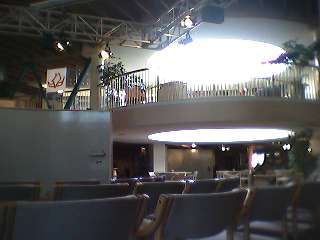
When we built the Palo Alto knOwhere Store we envisioned a Store that was open to the street and embraced it. We believed the Midtown Shopping area would change and become a community-focused version of University Avenue in downtown Palo Alto. We designed and built our Store, with it’s folding back doors and opening dome, to be an alive, walk-in marketplace for 21st Century knowledge-worker hunter-gatherers.
We are a long way, yet, from this vision and so is Midtown. There have been changes - many good, some bad. The community is evolving. And, these changes have lead to confusion and controversy.
We now find ourselves in is a movement in the Palo Alto Midtown Community to return the shopping area to “community-serving” retail. A new ordinance was proposed right before the holiday season and will be voted on the 15th of January. Most of the community does not “get” that the knOwhere Store is a community asset. So, we find ourselves embroiled in a circumstance that at other times and places we were able to be the neutral broker that facilitated the solution. The Cobbler’s son has no shoes!
Here are my notes for the letter/web page that we posted in response to certain challenges that knOwhere was not a retail store nor community serving:
| About the Basic Idea: There is a movement to formulate and pass a City Ordinance to bring community-serving retail space back to the Midtown Shopping Area. We at the Palo Alto knOwhere Store have personal, Professional and business interests related to this idea. First off, we are basically in agreement about the importance of community, community services and community shopping. Matt and Gail Taylor, the founders of the MG Taylor Enterprises - MG Taylor, knOwhere Stores, AI, Yolke corporation and iterations - have a long 44 year career in architecture and education and have pioneered many community-focused projects across the US. They both live within walking distance of the knOwhere Store and consider this to be their community. Matt went to school here in the 1950s and remembers Middlefield as a two lane bicycle ride out to the NASA hangers. As an Enterprise we are very aware of the often negative impacts of change and the compromises to lifestyle and community that have taken place in the last 50 years. We have consistently turned down work that has promoted the deterioration of community as an “expense” of business. We believe that the Palo Alto knOwhere Store - while not perceived that way by many today - is a community-serving resource. We designed it to be that and we are working to evolve with the community and become an ever more valuable asset to it. As practicing futurists, who build and supply environments for creativity all over the world, we know that both the concept and the practice of community is changing. The community that surrounds and uses the Midtown Shopping area is changing. This process of change cannot be stopped. It can, however, be provided with better guidance, with better design and a more conscious approach to the use of the consumer dollar. We see this issue as a design issue first and foremost. Secondly as a “how do you vote with your dollars” question. And last as a candidate for government intervention. There is no question that there are serious problems with the way the Shopping Area is evolving. We can change this if we design together as a community and take the concerns and interests of everyone into account. We can fight and compromise or we can collaborate and use this issue as an opportunity to reach a higher order. What we cannot do is fight economic forces that are bigger than we are. What we should not do is construct a legal situation that will make it impossible for the Shopping Area to adjust to future economic forces. What we at knOwhere hope this community will not do is let unimaginative reactions design our future by default. We cannot change the economic forces but we do not have to be passive victims either. We can act to make the kind of community that works. What follows are some comments about various aspects of our situation, an explanation of what the knOwhere Store is as a concept and where we are going as a practice, and last, an offer of our capabilities to help facilitate a creative and sustainable solution.
Needed: an Objective Definition of Community Serving: History of Stores in the Area: Many stores that met the traditional definition of “community serving” have gone out of business. Others, still here, are struggling. Why? Can these businesses be made economically viable? Are the businesses remaining (which still cover a wide spectrum of services) being supported by Midtown residents - can they be? The Transition of the Neighborhood: Real Estate Prices Mean Income. Real estate costs in the area are escalating. Eichler homes built for ten and twenty thousand are selling for a million dollars. The mean income is going up. What will this change in terms of community makeup and desires? What will the requirements be when this ordinance goes into effect? The neighborhood is in transition. It will take several years (as leases run out) before an new ordinance has broad effect. What will be the population, interests and requirements of neighborhood members then? What will be the economic conditions that they and the midtown businesses will face? How will the people really vote with their dollars? With shopping centers, discount stores that can sell a product cheaper than a small merchant can buy it and the Internet (which contrary to popular belief is not dead), what will be the future purchasing practices of the people who now use Midtown? Where do they spend their money today? What is “community serving” in a 21st Century knowledge-based network economy? This is the questions that has to be asked in the setting of long term policies. Surely, many traditional services will remain but many will not as new innovations and purchasing patterns continue to change the market landscape. Midtown cannot return to Pleasantville. It will die if it tries. The Midtown Shopping area can co-evolve with it’s changing neighborhood and provide a place to secure needed goods and services. It can be comfortable, quite, walkable and community-based. This is an issue of design and dialog between service providers and their customers.
Basic Dynamics: Which way is the stream flowing? You cannot legislate a market. Neighborhoods, like cities have to be “replacement economies” (Jane Jacobs). They have to have the diversity, financial means and imagination to reinvent themselves as the cultural and greater economic environment changes. Today, this is a constant process. What percentage of revenue from any of the existing businesses comes from the neighborhood? “Community businesses” and “community serving” is self-referential It is not the size of the businesses it is the attitude. The community decides what is a community. It decides what serves. It supports -or not - what it chooses to. If you want something and you can get it at your local shopping area, you will believe it to be “community serving.” If a community is based on a notion of location - perhaps walking distance, and so on, this leads to several problems. Actually, we all live and work in several self-chosen communities. I may feel “community” with where I drop my laundry off and have lunch. It may not be where my work community is - our my home community. This pattern is pervasive. I doubt that there is a business at Midtown that can live exclusively off the revenue from the local “community.” I doubt that the majority of Midtown residents buy what can be called “community-serving” goods and services from Midtown even when they are offered here. People just don’s act that way. A market in within a market: History of the “new” economy: MG Taylor experience:
The Palo Alto knOwhere Store: The knOwhere Concept - KnowledgeWorker and knowledge economy focus and retailing of all goods, products and services: What we have learned about experienced-based “selling” in 22 years: We know that knowledge cannot be transferred. An experience has to be created that facilitates each individual learning and recreating what they learn. Everything in the knOwhere Store is information, tools, products that we use in our work. We invite people in to our environment to use it. We then sell them those part - or the whole system - as they see the benefit of our way of working. When a new customer walks into knOwhere we never know if what they will take away is a book or an entire working system. We let the customer decide - we do not try to “sell” what we have but what we can create and adapt to the customer’ requirements and desires. We consider what we do as ART. We do know this: if our customers cannot use our environments they will never by them nor most of the components that make them up. This was true in 1979 - it is true today. We got here early: knOwhere moved to Midtown in 1997. This required a huge investment for us. We are a self-funded, family owned corporation. We got here early. However, if we had waited for a mature market, we would not be able to afford the price. In general, the larger market for our work, services, products and environments is just reaching a healthy level of demand. The Midtown community is behind this curve but moving toward it. After three years of effort, two million in investment and loses, the Palo Alto knOwhere Store reached the break-even point at the end of 2000. The knOwhere Store is designed to evolve to walk-in environment in a “village” setting: The knOwhere environment is designed to open to the street. It has a large outside/inside patio designed for interaction. Today, this is only used occasionally for special events. In time, as the community evolves we see our place becoming a portal for knowledge economy resources. Our present position: Today, most of our revenue is made by big events and big sales of work furniture. Most of our revenue is earned selling our services and goods. This is where we started. It is not where we are going. The vision from, the beginning, was to be global in our reach and local in each place we work. In the first two years the vast majority of knOwhere revenues came from outside California. In the last 18 months the shift has been to local Valley corporations. We are now experiencing the being of community interest and business. Our goal is to have a balanced mix of customers global, national, regional, local and community. We believe that this is healthy for us and the community. The resource we bring into the community are as important as the ones we develop within the community. Business today is global and the impact is always local. How our mix of activities is shifting: Our mix of business is shifting in three ways. This is according to design but the actual reality is and will be determined by the market. First, our business base is increasingly coming closer to home. Secondly, our big sale revenues are being increasingly balanced by higher volume of small sales (which are now about 25% of total revenues). Last, as we and the market matures, we will be retailing an increasing amount of many people’s goods and services not so exclusively our own. Community uses and involvement Where we live: Matt and Gail Taylor, MG Taylor Corporation and the KnOwhere Stores have always been active in the communities of which we are a part. We do this, mostly, by offering our services free to those communities. We have done it here on several occasions and will continue to do so. We do not do this to be good corporate citizens - we do it because we believe in doing it. Community development has been part of our work for over 30 years. Incubation story : “Community serving,” as I noted above, has many nuances. What it is or not depends a great deal on your perspective and what “economy” you are in. We all need cleaning, food and other basic services - but business incubation? When Gene Wang decide to start a new business startup, his third, he wanted to be near his growing family. A resident of the neighborhood, he found knOwhere. Over 14 months a business of one became twenty and “graduated” to their own environment (taking a lot of furniture with them). The result is PhotoAccess a successful Internet service who also, just recently, sold it’s chip technology to Agilent. With his business growing, Gene is now thinking of a new idea and may come back to knOwhere. In the new economy where intensive work has to be balanced with family. Where walking to work is better than traffic jambs. Where home offices need to get access to high speed lines and expensive equipment, a hub like knOwhere is community serving. Not the traditional definition but a true value and a big part of our vision. How we contribute to the community: We are an asset to local and Midtown businesses. I doubt that there is a business, no matter what its service and customer focus that cannot use more income to defray costs. In 2000, knOwhere spent just at $100,000 in the local area. This will double in 2001. This number does not include our personal spending our our corporate technology purchases. We are talking goods and service from small proprietor owned and operated businesses. How we handle negative impacts: knOwhere has a low impact on Midtown. Our person/car traffic per square foot is very low. We manage our impact. When we have large groups for any duration, we bus them is and use the local church parking thereby contributing to the church’s economy. If KnOwhere became a high traffic traditional retail environment, there would be nowhere to park. As it is the office building next door and Starbucks makes healthy use of our parking lot at peak periods. Without this capability their business would suffer. The majority of the knOwhere staff and owners ride their bikes to work a significant portion of the year. What we do at knOwhere: Everything we do at knOwhere we consider to be retailing be it offering space, a service or a product . We offer these service/products bundled and as individual components. A “sale” for us can be a $19,95 book or a several hundred thousand dollar mix of our various products and services. We offer all this at the Store, at the customer location and through the Internet. We provide office hotelling and startup incubation services. Tenants are made up of a mix of our own companies, MG Taylor, Yolke, the knOwhere staff, iterations and other companies. These “outside” companies usually use us short term until they find permanent offices. We ask startups to leave when they reach a level of development and operation that is no longer appropriate for our environment and the Midtown area. We rent our space to groups for meetings, design sessions and project work. We also conduct sessions. Often, these sessions are staffed by KnowledgeWorkers who come in and do facilitation, art, video and documentation. Most of these are not our employees - they are network members. They are our customers as much as the end user. We perform a variety of knowledge services from producing video shows, designing and hosting web sites, doing research, providing environmental design services, teaching and facilitating creativity. We provide our customers place to sit read and work and access to a comprehensive library, as well as, the Internet. We sell books, art tools, toys, puzzles, art objects, games, travel kits, and a wide variety of work furniture which we design and manufacture. Almost everything in the environment is for sale - knOwhere is a 15,000 show room, demonstration, retail environment. We provide, on a custom basis, access to Internet, servers, multimedia edition and high quality scanning, electronic photo and color printing. Our focus is on the individual customer. Some of our customer work for large corporations who become our clients. We do not approach and market to corporations, however. We serve the individual knowledge worker, the “business of one” no matter how they work: alone, in teams, in large groups. Our work is based on the integration of the work environment, technical tools and work processes. Our specially is “group genius” because, today, no matter your organization the majority of work is done in collaboration with others. This is knOwhere - the marketplace for the new economy.
A Personal Note: Matt and Gail live in the Community: Matt went to jr. High School in this community. Both Matt, who technically works for MG Taylor, and Gail, who works for knOwhere office at home and in the knOwhere store. We work here and live here. Matt’s place is 18 paces from the front door. Gail’s on the second level looking down into the retail area. Sons Todd and Jeff are a few feet away. It may be 21st. Century, it may be a corporation with the employee’s owning stock, it may run differently and have a “new” mix of goods and services, it may do business all over the world, however, it is still family, still a hands on enterprise and still community focused. The staff: The knOwhere staff is young, creative and excited about what they do. They get experiecnes here that can rarely be found in one business. The run the store and serve a wide variety of customers with a vast mix of goods and serices. Everyday is different. We have over two million in this environment: Gail and Matt conceived of the knOwhere Store in the mid 70s. The Palo Alto Store is the first almost full prototype of that dream. It has taken personal money to make it real. knOwhere believes a new economy is emerging, the era of the knowledge worker is here and that communities are going to redefine themselves around these new realities. Whose Model of "COMMUNITY" is valid? knOwhere supports the idea of community serving. We do not believe that any business can ignore economic forces and that few, if any, can derive their living from one narrow geographic area. We do believe that traffic can be lessened, that amenity can exist on the street, that businesses can serve individuals and corporation alike if they stay focused on people. We chose Midtown because we believe our path and the Midtown community path are crossing. The story of the old Burgmans was that if you could not get it here then you did not need it. Our aim is the same. If a knowledge worker cannot get it (or make it) at knOwhere then... Community, neighborhood shopping has to be a mix. It is diversity that makes a viable community. Too much of any one thing distorts the experience. Community serving does not mean just “basic” services (whatever those are). We believe knOwhere belongs here.
Our history of Community support: Kansas City: Gail Taylor developed and ran the Learning Exchange a community based education non profit that is still running over 25 years later. Alternative educational programs were created and introduced into the school system. Teachers, community leaders, homemakers, children and businesses were all part of the process. Matt started and directed the Renascence Project that , among other projects, started restoration in the run down parts of the city and promoted their reemergence. Boulder: An afforadable Housing project was the first task that MG Taylor Corporation took on. We facilitated over several years many controversies between the city, residents and businesses. the Boulder Mall where we worked, just starting then, is a vaible downtown area today 22 years later. It is mixed use; offices, stores, restraunts It has a mix of locally owned and operated retail stores,as well as, a mix of community serving and ‘attracting” regional stores. The Mall has successfully competed against larger regional centers and urban sprawl. Orlando: MG Taylor facilitated the Bush White House “City of Light ” initiative in partnership with the Orlando Chamber of Commerce and the Disney Corporation. A series of 12 hour design sessions for groups of 50 citizens, looking at all aspects of community life, ended in a day-long celebration of over 1,500 people at the civic center. Baltimore Project: MG Taylor/knOwhere is working with civic leaders to develop a consortium to bring life back into one of Baltimore’s most depressed neighborhoods. The basis of this project is to build true community and a grassroots economy.
Recommendations: Do it together: A community is the result of collaboration, good faith, hard work and lots of time. It take dialog and good design to make a community works and can be sustained. This is the only way the Midtown’s issues are going to be worked out. We will help: Everyone’s experience is real and true. All the differing points of view that have lead to this Ordinance has some validity. The question is if an Ordnance is the solution or the whole solution. There is an alternative to a war of clashing world views, differing interests and angry voices. That is community design process that matches desires with reality and practice. knOwhere is willing to devote time, energy and resources to this quest. We offer our experiences and service to that end.
|
We have not delivered our message to this community else we would not be where we are in this process. We are part of this controversy when we should be perceived as a facilitator of a solution. Our involvement in the community is, of course, far greater than most people know. It has not as much as our vision requires or even what has been our past practice in other times and cities. We do not get involved in community to be a good corporate “citizen” but because it is our roots and our nature to do so. Our business is a community building enterprise. We do so in many different contexts, venues and scales. Local community is the basis of all community.
knOwhere has been through a difficult startup in Palo Alto. After three years we have just reached break-even. We have spent over two million dollars getting this Store into business. In 2001, we will begin to have the cash flow to do more of the things we want to do. This will include expanding our presence in the life of Midtown. We can only do this, however, at a rate that the community can respond. We got here early. Our business here and the changes in the community will merge sometime in the future. How far in the future we cannot control.
knOwhere will change as the community around it changes and we have the obligation to be a leader in that change. Not everything related to our “new” economy is beneficial. The market may be efficient and it may get it right in the end but it can often be a blind machine that rolls over a lot of value in the short term. Preservation does not start until after things are threatened. The old ways are not missed until they are threatened.
knOwhere has tools to help people better understand these dynamics and to take a far greater active part in shaping their lives.
It is time for us to step up our community involvement and facilitation.
It is time for TOOLS seminars, ReBuilding the Future, Artist’s nights, Syntopical Reading sessions and for us to expand the commodity products part of our retail area: books, art supplies, travel solutions, home items and so on.
It is time to better focus our knOwhere Store KnowledgeAgents, network members, and products on community issues: water, education, home remodeling, personal transformation, Permaculture, energy solutions, home work environments, personal computing and networking.
Matt Taylor
Palo Alto
January 11, 2001

SolutionBox voice of this document:
VISION • PHILOSOPHY • PROGRAM
revised: January 15, 2001
• 20010111.181233.mt • 20010115.32674.mt •
Copyright© 2001 Matt Taylor