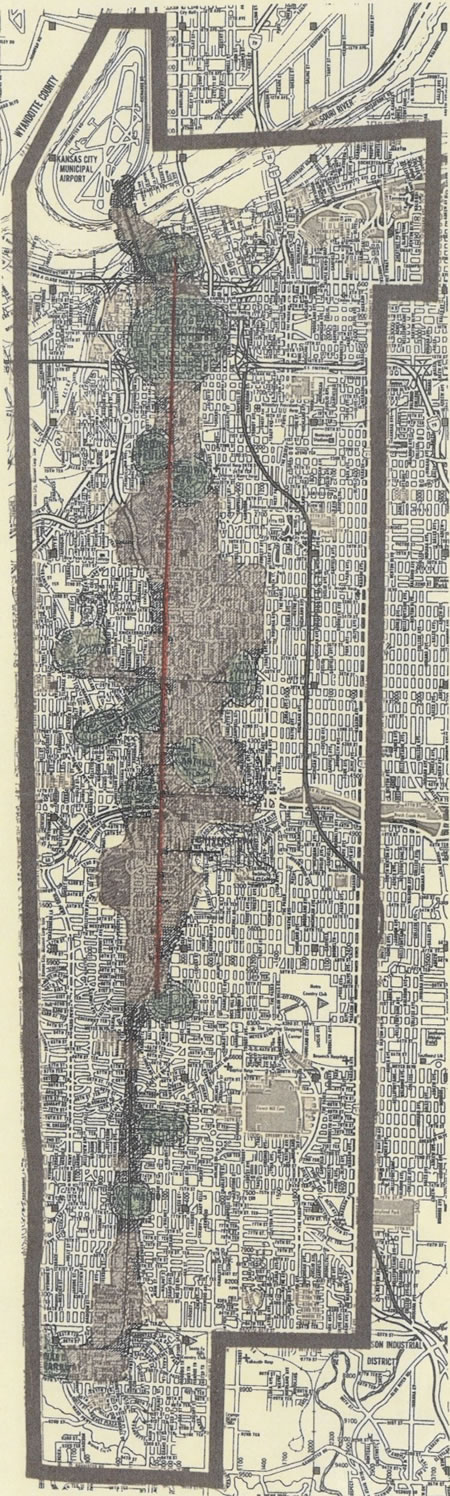
Birth of the Master Planning Process | | When I first arrived in Kansas City, in 1971, I bought a bicycle and road around the neighborhoods a great deal. Kansas City is a great city to do this and had - and still does - many neighborhoods of merit. What became clear was that there were many villages and urban centers that could be connected by a potential corridor thus creating an unique urban experience. If these could be left with their unique character yet integrated by a new urban corridor and if their surrounding blocks could then be developed into appropriate mixed use neighborhoods, then a urban environment of great utility, beauty and ambiance could be created for a surprisingly small investment. This potential could be said of most older cities that grew by waves over an extended period of time. However, I had never seen so much potential, with so much upside, with so little cost and risk, as this. | | This realization lead to the Master Plan concept and the idea that today is realized as the MG Taylor NavCenter. The Renascence project undertook the promotion of the KC Strip project both as a concept and by our efforts of saving quality housing in what had become marginal areas. We failed to get the planning process started but did save several pieces of real estate that are prosperous homes today. This story is told elsewhere [link]. What follows, below, is a description of the KC Strip idea and what would likely exist today if the idea of it had caught on 30 years ago. | | | | | GiTo ReDesigning the Future | | | | | | | GiTo Master Planning Process | | | | | | | GoTo Renascence Reports 1977, 1978 - Index | | | | | | | GoTo Planetary Architecture - The Case | | | | Matt Taylor
Nashville
December 5, 2004 
SolutionBox voice of this document:
INSIGHT • POLICY • PROGRAM | |
posted: December 5, 2004 revised: July 26, 2005
• 20041204.190271.mt • 20050726.372510.mt • (note: this document is about 5% finished) Copyright© Matt Taylor 1976, 2000, 2001, 2003, 2005 IP Statement and Policy | |
|