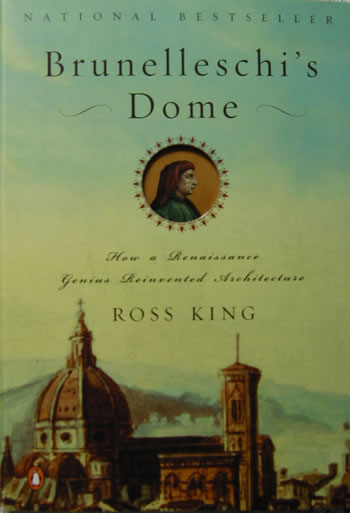
“The decision to adopt Neri di Fioravanti’s design represents a remarkable leap of faith. No dome approaching this span had been built since antiquity, and with a mean diameter of 143 feet and 6 inches it would exceed that of even the Roman Pantheon, which for over a thousand years had been the world’s largest dome by far. And the cupola of Santa Maria del Fiore would not only be the the widest ever built: it would also be the highest.” p. 9 “Neri’s model of the dome became an object of veneration in Florence. Standing 15 feet high and 30 feet long, it was displayed like a relquary or shine in one of the side aisles of the growing cathedral. Every year the cathedral’s architects and wardens were obliged to place their hands on a copy of the Bible and swear an oath that they would build the church exactly as the model portrayed.” p. 10 “Thus when the competition to solve these difficulties was announced in the summer of 1418, more than a dozen models were submitted to the Opera by various hopefuls, some by craftsman from as far away a Pisa and siena.“ “However, of the many plans submitted, only one - a model that offered a magnificently daring and unorthodox solution to the problem of vaulting such a large space - appeared to show promise. This model, made of brick, was built not by a carpenter or mason but by a man who would make it his life’s work to solve the puzzles of the dome’s construction: a goldsmith and clockmaker named Filippo Brunelleschi.” pp. 10 & 11 |