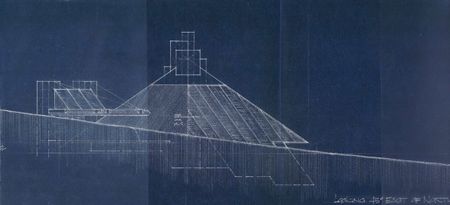
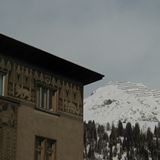
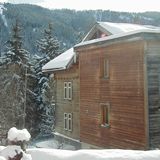
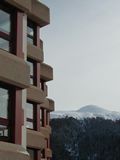
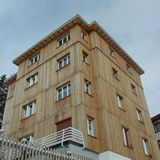
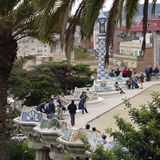
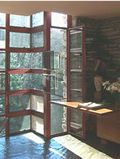
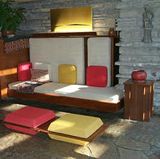
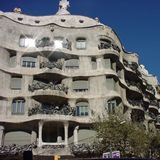
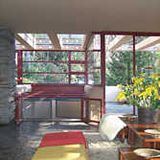
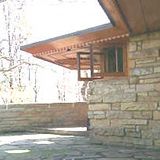
Steinmeyer Residence - 1976
Designed to exist totally off the grid | | Where: | Palo Alto to Japan back to Palo Alto | | At: | knOwhere Store to Osaka and Kyoto, Japan and back to knOwhere | | Mission: | Our “coming out” party continues. Work on the TANSTAAFL [link] DesignShop events, which are in the process of being rescheduled, speaking engagements in California, Japan and Korea, a new License opening our work to the venture capital community | | It is the 25th anniversary of the Steinmeyer Residence - a self contained home that almost got built. A real technological push then, feasible today. An alternative to energy crises and unnecessary ecological damage. A better way to live. | Syntopical Reading:
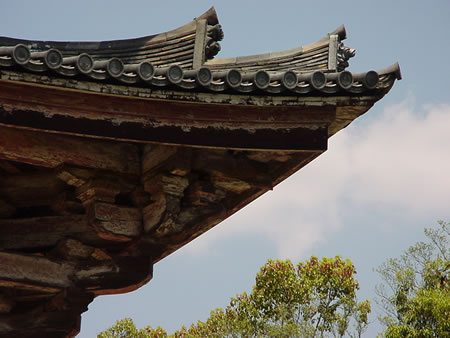
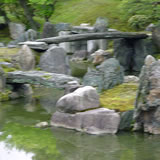
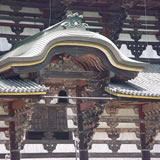
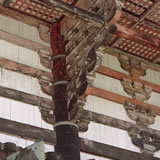
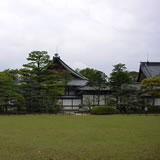
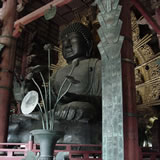
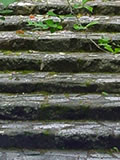
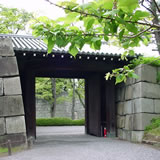
Jeffery A. Hayes Tesla’s Engine - A new Dimention for Power; James Lovelock Gaia - The Practical Science of Planetary Medicine; Kathryn McCamant and Charles Durrett with Ellen Hertzman COHOUSING - A Contemporary Approach to Housing Ourselves; Leland M. Roth (text) and Bret Morgan (photography) SHINGLE STYLES - Innovation and Tradition in American Architecture 1874 to 1982; Henry Serrano Villard and Willis M. Allen Jr. LOOPING THE LOOP - Posters of flight; | | | The traditional architecture of Japan is without peer. The perfection of these works, hundreds of years old, is staggering. Here is my report [link] of an unforgettable architectural experience. | | lh: TODAI-JI Temple, Nara
center: Ryoanji Temple, Koyoto
rh: Nijo Castle, Koyoto | | The saga of “the economy” continues. What is the true nature of this experience [link]? | |
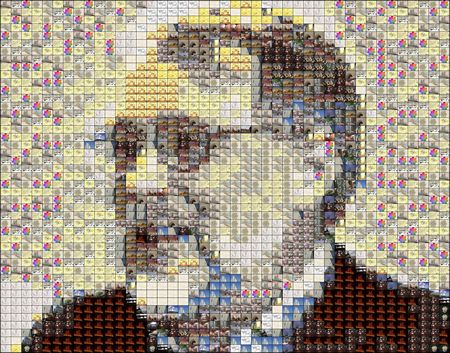 Click on different parts of mosaicMatt
to see what is on my mind | January 3, to March 31, 2001 | | Where: | Palo Alto to Davos, Switzerland back to Palo Alto | | At: | knOwhere Store to the World Economic Forum and back | | Mission: | After three years of “rope-a-dope,” MG Taylor starts bringing it’s agenda to a broader population. The Invitational DesignShop [link] events of 2001 will begin this process | | It is also time for me, personally, to launch the projects that caused me, in the first place, to participate in the creation of the Taylor Enterprises and that keep me involved to this day. Projects that would have no chance without the tool-kit the MG Taylor Corporation set out to create. Gaia Project [link]; Master Planning Project [link]; Earth as a Garden and Work of Art projects [link]; the 2020 project; the Return of the Usonian project [link]; Bootstrap to Space project [link]; Xanadu [link]; MegaCities [link]; Domiciles [link]; RDS [link]. | Syntopical Reading:
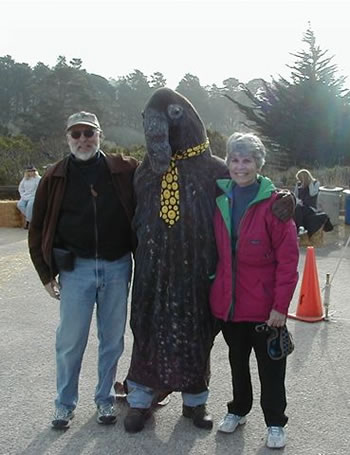
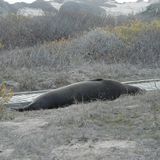
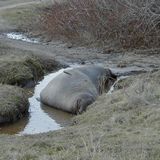
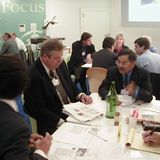
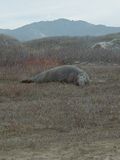
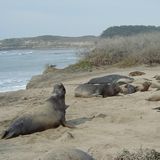
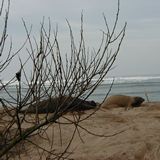
R. Buckminster Fuller Your Private Sky; Malcolm Gladwell The tipping Point - How little Things Can make a Big Difference; Bart Kosko Heaven in a Chip - Fuzzy Visions of Society and Science in the Digital Age; Patrick Tierney Darkness in El Dorado - How Scientists and Journalists Devastated the Amazon; Richard Wagner & Howard Cook (illustrations) Designs On Space - Blueprints for 21st Century Space Exploration; Kristin Lund, Hans Jenssen & Richard Chasemore (illustrations) Inside the World of Star Wars - Episode I; Arthur C. Clarke Profiles of the Future - An Inquiry Into the Limits of the Possible; Joshua Slocum Sailing Alone Around the World; Michael Frayn Copenhagen (A Play); Kojin Karatani Architecture as Metaphor; Roger Billcliffe Mackintosh Furniture; Elizabeth Hilliard The Tile Book - Decorationg with Fired Earth; Ester McCoy Five California Architects; Juan Bassegoda Nonell Melba Levick (Photographs) Antonio Gaudi - Master Architect; Maya Lin Boundaries; Pierluigi Serraino and Julius Shuman Modernism Rediscovered; Barbara Mac Lamprechc Richard Neutra; Robert Grudin Book; Jeremy Rifkin The Age of Access - How the Shift from Ownership to Access is Transforming Capitalism; Ray C. Anderson Mid-Course Correction - Toward a Sustainable Enterprise: the Interface Model; Jacques Barzun From Dawn To Decadence - 500 Tears of Western Cultural Life; Kathry Phillips Paradise by Design - Native Plants and the New American Landscape; Antonio Damasio The Feeling of What Happens - Body and Emotion in the Making of Consciousness; | | Jeff and Shari gave us a day with the Elephant Seals for Christmas. Once a year a few visitors are allowed to intermingle with the seals during their breeding and birthing season. This is one experience where the word “awesome” is not an cliché nor exaggerated. | | Three dubious characters seen lurking around the beach | | You might think from the pictures below that these seal sleep a great deal. This is true. However, when they move they MOVE. You cannot take pictures when you are getting out of the way of 2,000 plus pounds charging another bull. These animals swim 10,000 miles a year making two complete circuits between their feeding and breeding grounds. When on land, to breed, birth and molt, they do not eat for up to three months at a time. When they are not active they actually go into a hibernation phase to save energy. Incredible adaptation and survival skills. | | These animal are magnificent and being with them a day was a once-in-a-lifetime experience. Our Christmas/New years visit to the redwoods and this time reminds us of what we are putting at risk by mindless human expansion. I believe there is room on this planet for all species - it is a matter of design. Solutions will not be found with political-economic compromises. | | At Davos, we worked with leaders on systemic issues. A start. | | Elephant Seals and World Leaders doing their thing
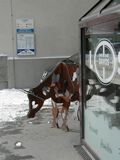
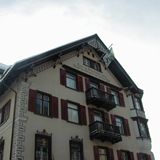
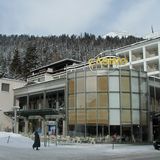
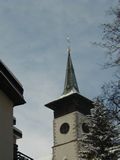
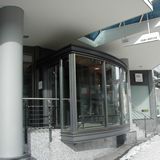
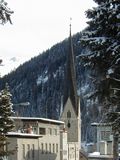
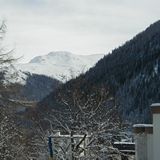
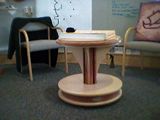
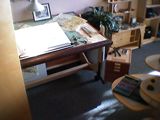
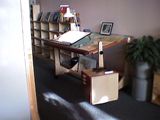
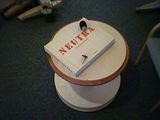
January 2001 on Planet Earth | | For my photo matrix this period, I could not resist juxtaposing our seal and WEF experience. All species and societies have elaborate traditions and rituals by which they conduct their business. It is both amusing and enlightening to look at these two different systems and realize we experienced them only 10 days and half a world apart apart. | | The workshops for the World Economic Forum at Davos went well - truly an amazing collection of people. The focus of this year shifted attention to many existing and emerging social issues and broadened the participation. The WEF is now about a great deal more than just business and economics. The problems associated with globalization are getting serious attention. | | Being at Davos was an interesting exercise in the relationship between reporting, perception and experience. Many at Davos wanted to hear about the great energy “crises” in California (of which, of course there is none) while, after I got back to the California, everyone wanted to hear about the social disruption in Switzerland (which, of course, there was very little). It is not that the press reports inaccurately, it is what is not reported that distorts things so much. Information travels - context does not. | | The issue of the energy crises and if it was news or not came up in a Knight Ritter session I did before leaving for Davos. I told them it was not news. The “crises” is like someone putting on a blindfold, at midnight, and running down a dark street until he runs smack into a wall - and then declaring himself a victim of circumstance. I said that the energy supply problems and costs were “olds” - NEWS would be reporting on the many credible alternatives that are not commonly understood and can be quickly applied to the situation. All the press now is aimed at the shortages and how we are going to do more of the old policies and processes that have clearly failed. This is like fixing your fine watch with a hammer. It MIGHT work - but then again, usually not. | | As of late February, here in California a state know for it’s ecological stance, a few articles are cropping up about private uses of alternative energy. The government reaction has been the use of more coal and the relaxing of pollution standards. The way the payments problem is being being handled is placing the small alternative commercial energy providers at more economic risk - some may actually go out of business. Conservation and new energy sources combined with a long term social policy is not being employed. Under these circumstances, it is clear how the majority of the market will vote. This, of course, be labeled as the workings of a “free economy” providing further confusion [link]. | | I was happy to report to those in Davos that there is plenty of energy in California as long as common sense is applied and to those in California that those attending the WEF were never at risk. | | The California energy crises and the social dissent related to globalization, however, are serious symptoms of the same governance issue: the inability of our society to anticipate future consequences [link] and engage in vigorous dialog prior to hitting the wall. Until we learn to respond to weak signals, engage all those effected in dialog that produces viable alternatives to anticipated problems, we will be doomed to reaction, fear, alienation, hate and bashed together political compromises that merely generate more problems for the future. | | Energy costs in California and dissent at Davos are both the result of positive feedback loops that are approaching lock in. Unless anther approach is taken - and soon - this will lead to true crises which will greatly re-calibrate the blips we are now experiencing. We will become victims of our own inattention. What is new about that? | | Someday, media will report NEWS and businesses will sell GOODS. Keep working for it. | | Davos is a wonderful village and when it comes to running things you cannot beat the Swiss. I was greatly impressed with the architecture. The Swiss have figured how to make post-modernism work because to them it is not post. Their ability to bring their traditional idiom into harmony with modern materials and methods is without peer. Below is a taste of Davos. | | | These shots of Davos do not reflect the full variety of the environment nor do the capture the full ambiance of the place. They were taken on a one hour walk on a Sunday morning. There is much more to see than this indicates. | | My Davos report [link]. It is a story of paradoxes. | | Meanwhile, back on the home front: | | We find ourselves in a movement in the Palo Alto Midtown Community to return the shopping area to “community-serving” retail. A new ordinance was proposed right before the holiday season and was passed on the 15th of January. Most of the community does not “get” that the knOwhere Store is a community asset. So, we find ourselves embroiled in a circumstance that at other times and places we were able to facilitate the solution. The Cobbler’s son has no shoes [link]! | Two new pieces from AI came on the 9th for my workspace - they are prototype pieces to be tested, improved and added to our WorkFurniture system. The pieces both use cherry as a highlight. We have long employed contrasting woods in our custom work and are now making it part of our production Trade Dress. The small rolling “coffee” table is a new item. We have needed it for some time. The center support is the column we use for the extensive glass areas in our CubeOffice [link] system - a nice reuse. The table is very solid and can be used as a low stool. | | The Drafting table is an improvement on an existing piece. It has a leather pad on the front edge and a suspended, swinging out three-drawer unit that can be mounted on either side of the table. Two of the drawers are shallow for drawing tools and the bottom is a file cabinet. This has already proven to be very useful. |  The Gaia Project [link] got a logo design in January. There are several variants of this design that we are looking at. The design was created by Robert Darling. Reviving the Gaia Project concept is timely given the escalating conflicts between the advocates of economy and the advocates of ecology. What has to be understood is that both these, economy and ecology, are the same subject. They operate at different levels of recursion and at different time scales. The Gaia project has a specific focus and will not, in itself, resolve all the issues related to this conflict. However, it offers one example of a way of moving beyond conflict to design and action. The Gaia Project [link] got a logo design in January. There are several variants of this design that we are looking at. The design was created by Robert Darling. Reviving the Gaia Project concept is timely given the escalating conflicts between the advocates of economy and the advocates of ecology. What has to be understood is that both these, economy and ecology, are the same subject. They operate at different levels of recursion and at different time scales. The Gaia project has a specific focus and will not, in itself, resolve all the issues related to this conflict. However, it offers one example of a way of moving beyond conflict to design and action. | | OK. I can’t take it any more. I have to say something [link] about the dot.bubble game. | |
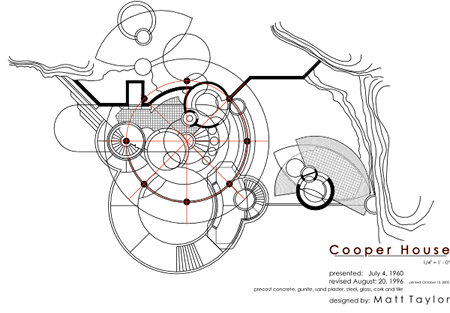
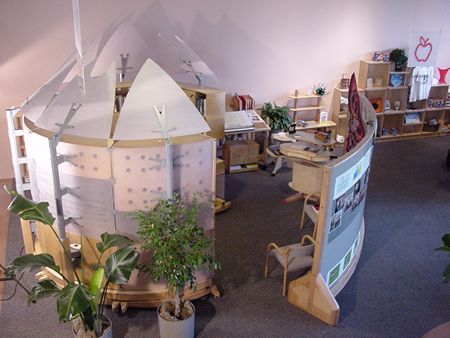
September 15, 2000 to Jan 3, 2001 | | Where: | Palo Alto to Princeton, to New York, to Cincinnati to Palo Alto to Ft. Meyers to Palo Alto, to Boulder, Co., to Palo Alto to Phoenix and back. Then somewhere along the coast for year end vacation. | | At: | Palo Alto KnOwhere Store, ETS NavCenter, Marenzana Conference Centers, Palo Alto KnOwhere, CAMELOT, Palo Alto KnOwhere, AI offices, to KnOwhere, to Taliesin and back and then to the Lost Whale Inn. | | Mission: | The next iteration unfolds: Invitational DesignShop events, FutureViews, ReBuilding the Future seminars, collaborative design RDS deployments, KnetWeb. The Business Units are growing and gaining in market position and business model clairity. Collaborators are finding their way into the ValueWeb [link] network. The architectural practice is taking shape. Soon, the master planning process can begin. | | Now, capability, opportunity and agenda match. It took many pieces, and many years, to get the system in place - the system emerges by it’s own terms - a combination of causality and surprise. How will it be employed? | | It all starts with a thought... Out there, many are thinking and dreaming. Dreaming of better alternatives that produce more sustainable results. All they need is a tool kit... | | Next year will be busy year - the task, now, is to get ready [note November 2004]. | | | I have worked in my Pod for one year and recently rearranged [link] my entire workplace. A couple of new pieces are on the way from AI which will add new functionality. Working here is a pleasure - a synthesis between the utility I require, the expression of my personal brand and the interface with a larger social space. Circular forms are without question more fit for humans than unarticulated rectangles. Handled correctly, they can provide a great deal more utility per square foot than conventional means. | | The Cooper House, 1960, [link] revisions are nearly finished - I am doing this for fun and to tune up my design skills. It have been a long time since I have worked on a truly complex architectural assignment and now several are on their way into the office. In addition, I have an intuition that this project just might be buildable soon. I am greatly attached to the idea of it and want to see it done. It is a solution looking for a problem. The Cooper design was my first mature work - the first time that I had a measure of mastery of the architectural elements at play in a complex commission. Revising it is like visiting the past while preparing for the future - it has been a very tactile, sensual experience. | | The foundation II WorkFurniture series by AI is just about ready. We had a final design session on the configuration of the system in Boulder. This will be a completely integrated system: WorkWalls, Pods, CubeOffice system and Armature elements all dockable and “plug and play” capable with each other - this means a complete wall-to-wall, floor-to-floor solution from one system. An “instant” environment in 30 days. | | Jonathan Carr Mahler; Jeremy Narby; The Cosmic Serpent - DNA and the origins of Knowledge; George Packer Blood of the Liberals; Sim Van Der Ryn and Stuart Cowan Ecological Design; Steve Lerner Eco-Pioneers; Eugene Tsui Evolutionary Architecture - Nature As a Basis for Design; Tom J. Bartuska & Gerald L. Young, editors The BUILT ENVIRONMENT - A creative Inquiry Into Design & Planning; Katherine Nelson, editor WEBSIGHTS: The Future of Business and Design On the Internet; James Wines Green Architecture; Frank Close Lucifer’s Legacy - The Meaning of Asymmetry; Frances A. Yates The Art of Memory; Christopher Curtis Mead The Architecture of Bart Prince; Claudia Gerdes and Jutta Nachtwey Cybershops; Simon Velez Grow your Own House; Nick Taylor LASER - The Inventor, The Nobel Laureate, and the Thirty-year Patent War; John Rattenbury A Living Architecture - Frank Lloyd Wright and Taliesin Architects; Paul Laseau and James Tice Frank Lloyd Wright - Between Principle and Form; Myron A. Marty and Shirley L. Marty Frank lloyd Wright’s Taliesin Fellowship; David Rothenberg Hand’s End - Technology and the Limits of Nature; | | Organic [link] Expressions of the Built Environment - November 2000
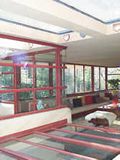
Frank Lloyd Wright - photos by Lisa Piazza
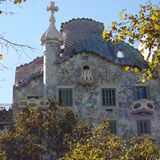
Gaudi - photos by Vlasta Pokladnikova
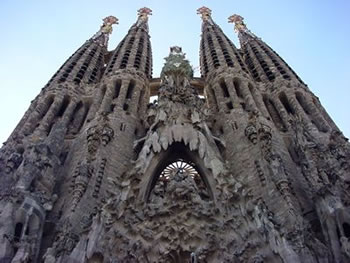
Camelot - photos by Matt Taylor | | Cathedral building [link] is one of the great acts of the human race. To me, it is not the deity or organization that matters so much as the human gesture. Cathedrals are a celebration. They are giving the best that can be given to the expression of pure art and creative exuberance. They take a long time so the project has to be created and recreated in the minds of many builders. The reward is in the doing of it - not in fame and income. New things are learned because the state-of-the-art is pushed. Cathedral building is about investment - not consuming, not return of investment. This act teaches every generation vital lessons that “everyday” life seems to miss. This level of art teaches and requires a contemplative life [link]. | | Sagrada Familia by Gaudi
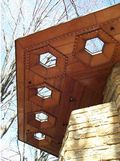
Photo by Vlasta Pokladnikova - November 2000 | | Gaudi’s Cathedral is one of the great contemporary examples of the genera. It’s construction started in the 19th Century, spanned the 20th and continues into the 21st. It is an astounding virtuoso piece. Is Gaudi dead? | | A single family dwelling can be a cathedral of another kind. In many respects a house is that for a single life or family and one of the most difficult works of architecture to do well. Great houses are rare. It has nothing to do with the budget and everything to do will the skill and dedication of both client(s) and architect. | 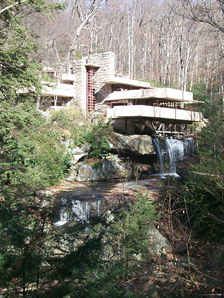 Wright had fallen into almost total obscurity [link] when he produced Fallingwater. It is, perhaps, the most famous house in the world and certainly a masterpiece. It also is a great gesture. And, it is a comfortable summer retreat house for a family. Gaudi and Wright were near comtemporiars although Wright lived and worked to a much older age. On the surface their work has little in common. At the root of things, however, they had a great deal in common. Both started tributaires of the “organic” school of architecture; both lived and breathed their work. They were great technical innovators and the structures of these two buildings are equally bold. Still, the it is a comfortable summer retreat house for a family. Gaudi and Wright were near comtemporiars although Wright lived and workcontrasts are interesting. Gaudi’s Cathedral is over a 120 years old and is still being built; Wright’s House is 64 years old and is undergoing restoration. Gaudi devoted the last several decades of his life to the Sagrada Familia and it barely took form before he died [rbtfBook]. Wright, who was in his sixties, worked for a quarter of a century more after Fallingwater [link] and built the bulk of his work after it’s completion - a body of work nearly 50 times greater than Gaudi produced. Gaudi died in relative obscurity, Wright became a household word and a modern icon. Wright had fallen into almost total obscurity [link] when he produced Fallingwater. It is, perhaps, the most famous house in the world and certainly a masterpiece. It also is a great gesture. And, it is a comfortable summer retreat house for a family. Gaudi and Wright were near comtemporiars although Wright lived and worked to a much older age. On the surface their work has little in common. At the root of things, however, they had a great deal in common. Both started tributaires of the “organic” school of architecture; both lived and breathed their work. They were great technical innovators and the structures of these two buildings are equally bold. Still, the it is a comfortable summer retreat house for a family. Gaudi and Wright were near comtemporiars although Wright lived and workcontrasts are interesting. Gaudi’s Cathedral is over a 120 years old and is still being built; Wright’s House is 64 years old and is undergoing restoration. Gaudi devoted the last several decades of his life to the Sagrada Familia and it barely took form before he died [rbtfBook]. Wright, who was in his sixties, worked for a quarter of a century more after Fallingwater [link] and built the bulk of his work after it’s completion - a body of work nearly 50 times greater than Gaudi produced. Gaudi died in relative obscurity, Wright became a household word and a modern icon. | | Greatness comes in many forms. Our society is uncomfortable [link] with the notion, too often denying, building up and then destroying those who show a new way. At MG Taylor we have found, in our work, that the available talent is much greater than the rarity of great works would indicate. Had Wright died before Fallingwater, his work would have been known to a few - to be, perhaps, discovered by a future generation after most of it was torn down [link]. He practiced with incredible persistence in his life and work and enjoyed great physical health and vitality. Gaudi produced fewer works but practiced in a different social milieu. I would think that the Barcelona of the last Century would be less inclined to tear buildings down and replace them with “modern” works. In our country he may have been totally erased before his work was appreciated. About a third of Wright’s work is gone and he died famous. So it takes more than talent to produce great work that ends up enduring and having a lasting impact. It takes persistence and a measure of luck - you have to be in the right time and place and be able to seize the opportunity. Gaudi, apparently was quite the dandy as a young man. He became increasingly more recluse and religious [link] as he aged. Wright was flamboyant to the end and often criticized for his unabashed optimism. Both exibited a central integrity and purity about them and both were works of art in their own individual way. Both were helped along by unsung heroes at critical moments in their lives. Maybe, as a society, we should pay more attention to this unrecognized aspect of creativity. Gifford Pinchot [link] has delineated the critical role of the sponsor in the intraprenueral process. The mentor and patron may yet be critical to the emergence of greatness in our culture. | 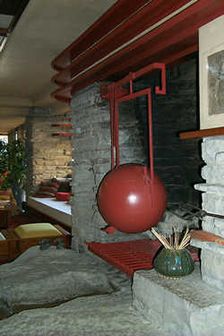 These pictures of Fallingwater [link] were taken by Lisa Piazza [link] this November. These pictures of Fallingwater [link] were taken by Lisa Piazza [link] this November.
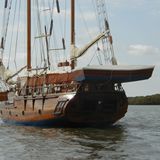
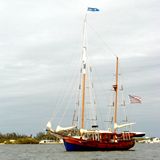
2000 was a busy year for me and I was able to spend only a total of three weeks on CAMELOT. Others, fortunately, were able to enjoy [link] her more than in the past. In my experience, she remains the quintessential work of architecture. She is an exercise of all the criteria [link] which an architect has to consider - and master - when producing a work. Keeping CAMELOT [link] is to practice Alexander’s [link] Timeless Way of Building. Architecture involves designing, building, using - the using part is the most neglected. It is rarely seen as an extension of architectural practice [link]. Buildings tend to be compromised and deteriorate over time - they should evolve and get better. Brand talks about this in How Buildings Learn [rbtfBook]. His thesis is solid, the question is what do they learn? Few buildings are designed so that they can evolve gracefully. Modern boats are beginning to lose this capability as they become mostly manufactured rather than built. I have never accepted the split between the manufacturing process and the craft process - nor the division between the building process and the using-evolving process. I believe all these elements [link] can be - must be integrated: precision and feeling, build-ability and evolve-ability. All are necessary for the next generation of environments. | | Photo by Captain Armour Rice
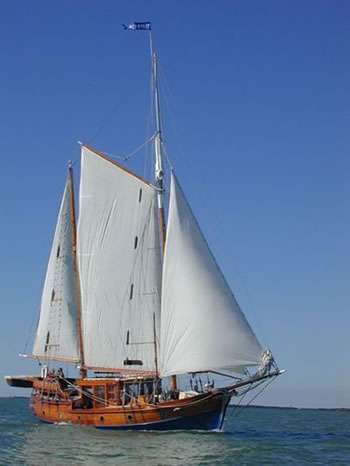
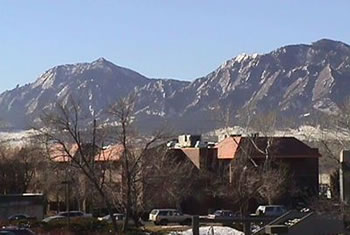
November 2000 | | CAMELOT [link] sailing Charlotte Harbor, Thanksgiving vacation 2000. A synthesis of utility and art - living, breathing, dynamic architecture. A place to rest, a place to work, a means of travel. | | | Boulder is always a great place to visit. We had a dash of snow - just enough to give the Flatirons, which can be seen from the AI office, a covering. The time at AI was spent working on new client environments, tying down the final Foundation 2 configuration and the end-of-year AI Board meeting. | | My last business trip of the year was to Taliesin. I have not been back to Taliesin since 1959 when Mr. Wright died - and then for a short visit in 1964 to show a friend how to get there. | | I have have not maintained any relationship with Taliesin in the last 42 years. The purpose of this visit was for Fred Stitt, founder and director of the San Francisco Institute of Architecture, to make technical arrangements so that SFIA and the Frank Lloyd Wright School of Architecture can connect electronically and share materials, courses and interactive experiences. SFIA [link] and Taliesin are the only schools I know of that focus on educating the organic architect Their approaches are different yet compatible - hopefully, a rich synergy will result. | | 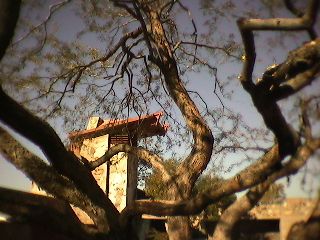 | | If there is any place on Earth that is magic, it is Taliesin in the early morning. Here, you return to your roots. | | photo by Matt Taylor
December 2000 | | The visit was short - only 20 hours. It was full of memories. A brief chance to talk with a few from my time here and dialog with some from a new generation. The work is being carried on with great energy and vigor. Taliesin West continues to grow, inspire and nurture 64 years after it was built. A community of architects, artists, builders, teachers and students carry on an important tradition while seeking a vision for the future. | | It was a time of snapshots [link] - remembrances from 42 years ago intermingling with images of today. | | Gail and I spent a quite Christmas at home resting and catching up on our web pages and some event designs for early next year. Between Christmas and the second of January we are traveling up the California coast to visit the redwoods. | | 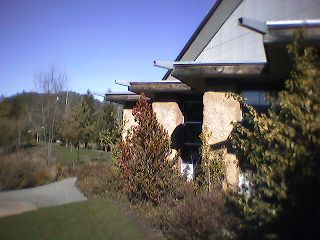 | | Straw bale construction and solar energy - demonstration that “alternative” energy methods work even for the demanding retail store application. | | photo by Matt Taylor
December 2000 | | This photo is of the Real Goods store designed by Sim Van Der Ryn. This was our first stop along the way. A photo essay of our trip go to Northern California Coast is under construction - 2000. [link]. | | The only thing I will say here is that there are few experiences of Nature as powerful as walking in an old growth redwood forest. I hope that we humans decide to use the freedom of the market place to “vote” wisely in the future and contain harvesting to within sustainable limits. The are many alternative materials that can be used for building and few alternatives to the experience of an intact forest. | | The wonderful thing about markets is that they truly reflect values. | | 2000 started for me with the design of my Bay Area Studio [link]. It ended with the design of the iterations Compound [link]. Mostly stolen time never the less the most active year for serious architectural design in 25 years - the first steps back to a full practice of architecture. | | 
SolutionBox voice of this document:
USING • LOGISTICS • PRODUCTION MANAGEMENT | |
Posted: Octiber 29, 2000 Revised: May 4, 2001
• 20001029.238712.mt • 20001118.341761.mt • 20001120.871937.mt •
• 20001125.452851.mt • 20001126.882093.mt • 20001206.341861.mt •
• 20001217.295812.mt • 20001224.348798.mt • 20010103.828361.mt •
• 20010105.672953.mt • 20010107.239419.mt • 20010110.856234.mt •
• 20010120.845377.mt • 20020202.545279.mt • 20020212.992884.mt •
• 20010504.884092.mt • reformatted November 13, 2004
with minor edits and links added Copyright© Matt Taylor, 2000, 2001, 2004 | |
|